
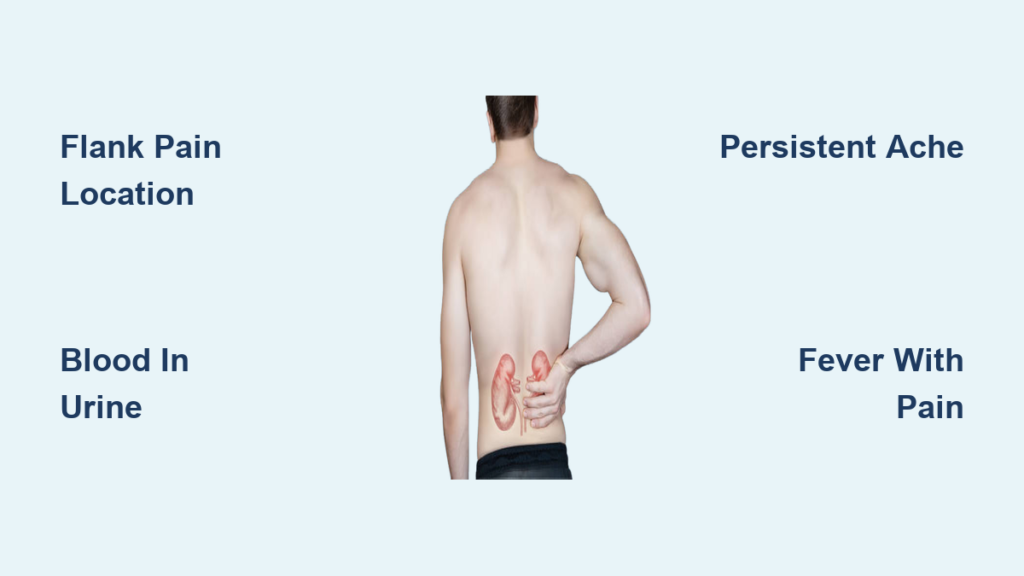
That deep ache just under your ribs won’t let you sleep. You’ve tried stretching, heat pads, even a new mattress—yet the pain persists. Before you blame your spine, consider this: up to 90% of Americans with chronic kidney disease mistake their kidney disease back pain for muscle strain. Learning to distinguish kidney-related discomfort from ordinary back problems could save your kidneys—and your life. This guide reveals exactly how to identify flank pain, understand its dangerous causes, and take action before irreversible damage occurs.
Kidney disease back pain isn’t just another sore back. It signals your kidneys are struggling to filter waste, and ignoring it risks permanent function loss. Unlike spinal pain, this discomfort originates deep in your flanks—where your kidneys nestle just below the rib cage. Within minutes, you’ll learn to spot the critical differences and know when to seek immediate help.
Flank Pain Location: Your Body’s Warning Signal
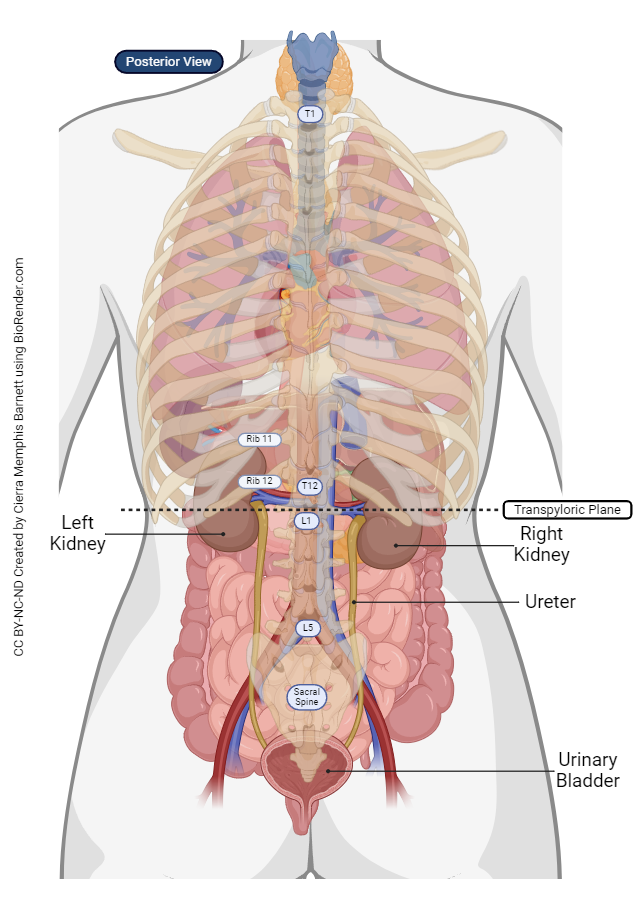
Why Kidney Pain Sits Higher Than Back Pain
Kidney disease back pain hits in your flank—the area just below your rib cage and above your hips on either side of your spine. Unlike muscle strain you can point to with your finger, this pain feels deep and internal, radiating from the front of your body. Many patients describe it as “pain in my side” rather than “pain in my back.” The key giveaway? It remains constant regardless of your posture. If bending or stretching changes your discomfort, it’s likely muscular. True kidney pain persists whether you’re standing, sitting, or lying flat.
Spotting the Pain Pattern That Signals Kidney Trouble
- Kidney pain: Constant dull ache (or sharp spasms with stones) that doesn’t shift with movement
- Muscle pain: Worsens when twisting or lifting, improves with rest
- Critical test: Gently tap your flank area—if pain intensifies, suspect kidney involvement
- Stone-specific clue: Waves of excruciating pain radiating to your groin that make you pace
Pro tip: Place your hands on your hip bones. Slide thumbs up toward your ribs. The area between your thumbs? That’s your kidney zone. Tenderness here demands medical attention.
Urinary Red Flags That Demand Action

What Your Pee Reveals About Kidney Health
Your urine is your kidneys’ report card. When kidney disease back pain strikes, watch for these urgent signs:
– Blood in urine (pink, red, or cola-colored)
– Cloudy or foul-smelling discharge
– Burning during urination
– Sudden urges to go despite little output
– Dramatically reduced urine volume
Ignoring these signals risks rapid kidney deterioration. Blood in urine combined with flank pain requires same-day evaluation—this often indicates stones or infection damaging kidney tissue.
Systemic Symptoms That Confirm Kidney Involvement
Kidney problems rarely stay isolated. Watch for these body-wide warnings:
– Fever over 101°F with flank tenderness (sign of infection)
– Nausea or vomiting unrelieved by anti-nausea meds
– Swelling in legs, ankles, or face (fluid retention from failing kidneys)
– Unexplained fatigue that sleep doesn’t fix
– Loss of appetite worsening over days
Critical mistake: Treating fever with NSAIDs like ibuprofen. These worsen kidney function—use acetaminophen instead.
5-Minute Kidney Pain Assessment Test
Your Immediate Action Checklist
Answer these questions to gauge urgency:
1. Location: Is pain under ribs but above hips?
2. Movement: Does pain stay constant when changing positions?
3. Tap test: Does gentle flank tapping increase pain?
4. Urinary changes: Any blood, cloudiness, or urgency today?
5. Systemic signs: Fever, nausea, or swelling present?
3+ “yes” answers = Call your doctor within 24 hours. Kidney infections can escalate to sepsis in hours.
Emergency Signs Requiring 911
- Inability to urinate for 12+ hours
- Severe pain preventing standing or walking
- Confusion or dizziness with flank discomfort
- Visible blood clots in urine
- Fever above 101.5°F with shaking chills
Time is kidney tissue: Delaying care for kidney infection increases permanent damage risk by 30% per 24 hours.
Top 3 Kidney Conditions Causing Back Pain
Kidney Stones: The Sudden-Onset Emergency
These mineral deposits trigger excruciating “renal colic” as they move. Pain starts abruptly, radiating from flank to groin in waves. You’ll pace, unable to find comfort. Critical factor: Stones under 5mm often pass naturally with hydration, but larger ones require urgent intervention. If pain lasts over 2 hours or you vomit repeatedly, seek ER care—obstruction can destroy kidney function in days.
Kidney Infections: The Silent Progressor
Pyelonephritis begins as a urinary tract infection that climbs upward. Unlike muscle pain, it worsens when lying down and features constant flank aching with fever. High-risk groups: Diabetics, pregnant women, and those with recent UTIs. Left untreated, infection spreads to bloodstream within 48 hours.
Polycystic Kidney Disease: The Gradual Threat
This genetic disorder causes fluid-filled cysts to enlarge kidneys, creating persistent flank fullness. Pain feels like heavy pressure bilaterally. Warning sign: Sudden pain spikes indicate cyst rupture or bleeding. Annual ultrasounds are essential for diagnosis.
What Your Doctor Will Do Immediately

Essential First-Visit Tests
Within minutes of your appointment, expect:
1. Urinalysis: Checks for blood, protein, and infection markers (results in 15 minutes)
2. Blood work: Measures creatinine and eGFR to gauge kidney function
3. Costovertebral angle test: Doctor taps your flank—if you wince, kidneys are likely culprit
Pro tip: Bring a urine sample in a clean container. This skips the 20-minute wait for collection cups.
Imaging That Reveals the Truth
- Ultrasound: First choice—no radiation, shows stones/cysts in 15 minutes
- CT scan: Gold standard for stones (done within 2 hours in ER)
- Avoid X-rays: Miss 10% of stones and provide poor soft-tissue detail
Timeframe: Most clinics complete imaging within 24 hours of symptom onset.
Safe Home Relief While Waiting for Care
Immediate Pain Control That Won’t Harm Kidneys
Hydrate strategically: Sip 8oz water hourly (not chugging) to flush stones without stressing kidneys. Heat therapy: Apply heating pad to flank for 20-minute intervals—this relaxes ureter muscles. Medication rules:
– ✅ Acetaminophen: 1000mg every 6 hours (safest option)
– ❌ NSAIDs: Ibuprofen worsens kidney function—avoid completely
– ⚠️ Opioids: Only for severe pain under doctor’s supervision
Dietary Tweaks to Reduce Pain Now
- Cut sodium immediately: Avoid processed foods to reduce swelling
- Skip high-oxalate items: Spinach, almonds, and beets feed stone growth
- Maintain calcium: Eat yogurt or cheese—low calcium increases stone risk
- Lemon water: ½ cup fresh lemon juice in water helps dissolve stones
Critical error: Drinking cranberry juice for infections. It concentrates urine and worsens stone pain.
Preventing Future Kidney Disease Back Pain
Daily Habits That Protect Kidney Function
Hydration timing: Drink 1 glass upon waking, before meals, and hourly during activity. Weight management: Losing 10% of body weight cuts stone risk by 40%. Exercise smartly: 30-minute walks 5x/week regulate blood pressure without dehydration risk. Track urine output: Aim for clear, copious urine—dark yellow means you’re hurting your kidneys.
Medication Dangers You Must Discuss
Common drugs that trigger kidney disease back pain:
– NSAIDs (ibuprofen, naproxen): Cause acute kidney injury in 5% of users
– PPIs (omeprazole): Linked to chronic kidney disease with long-term use
– Antibiotics (gentamicin): Directly toxic to kidney tissue
Always ask: “Is this medication safe for my kidneys?” before accepting prescriptions.
Special Risk Groups: Know Your Vulnerability
Women’s Hidden Danger Signs
Pregnant women face 3x higher kidney infection risk due to urinary stasis. Flank pain with fever requires same-day care—untreated infections trigger preterm labor. Critical note: UTIs in women often escalate to kidney involvement within 48 hours.
Athletes: The Dehydration Trap
Contact sports risk kidney trauma from impacts—sudden flank pain after a collision needs immediate ultrasound. Rhabdomyolysis alert: Extreme muscle soreness with dark urine after intense workouts can clog kidneys. Chug 1L water immediately and seek ER care.
Seniors: Atypical Pain Presentations
Elderly patients often show confusion or falls instead of classic flank pain. Any behavioral change with reduced urine output warrants kidney evaluation. Key fact: 40% of seniors with kidney infections present without fever.
Key Takeaways for Kidney Protection
Remember these three action points:
1. Location is diagnostic: Kidney disease back pain sits higher (under ribs) and deeper than muscle pain
2. Urine changes = kidney alarm: Blood or cloudiness requires same-day testing
3. Never ignore persistent pain: 72 hours untreated risks permanent kidney damage
Your kidneys work silently until they fail. Learning to recognize kidney disease back pain early gives you the power to intervene before dialysis becomes necessary. When that deep flank ache strikes, skip the heating pad and reach for your phone—call your doctor within 24 hours. Your kidneys can’t wait, and neither should you.