
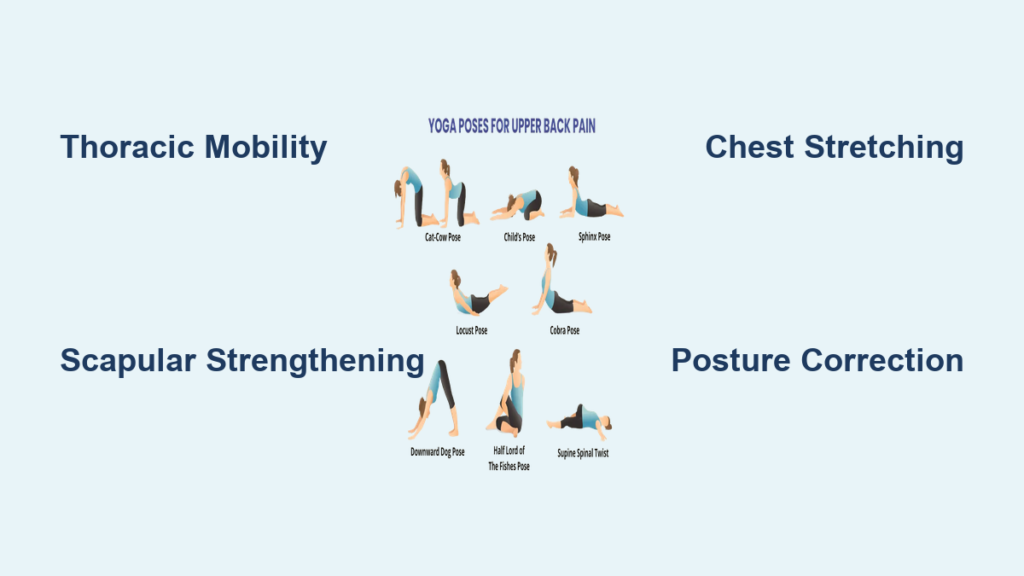
That persistent ache between your shoulder blades isn’t just annoying—it’s your body’s warning signal that something’s wrong. Whether you’re slumped over a laptop all day, constantly checking your phone, or dealing with old injury patterns, upper back pain affects millions who simply want to move without wincing. The right physiotherapy for upper back pain exercises can transform your daily comfort within weeks, restoring natural movement patterns and building resilience against future flare-ups.
This evidence-based guide delivers specific exercises proven to reduce upper back discomfort by addressing the root causes: stiff thoracic joints, weak postural muscles, and tight chest structures. You’ll learn exactly which physiotherapy exercises for upper back pain to perform, how often to do them, and crucial modifications if standard movements cause discomfort. By following this structured approach, you’ll develop a stronger, more flexible upper back that supports pain-free movement throughout your day.
Morning Mobility Activation Sequence
Starting your day with targeted movement sets the foundation for lasting upper back pain relief. Your thoracic spine often stiffens overnight, making gentle activation essential before tackling more demanding exercises.
Dynamic Neck and Shoulder Awakening
Stand tall with feet hip-width apart. Slowly tilt your head toward your right shoulder, then roll your chin in a smooth counter-clockwise circle until your left shoulder touches your ear. Complete 2-3 full rotations in each direction, moving with deliberate control. This sequence lubricates cervical facet joints and prepares them for thoracic movement. Immediately follow with shoulder rolls—5 backward rotations followed by 5 forward rotations—to activate the scapular stabilizers that support upper back health.
Thoracic Foam Roller Release
Position a foam roller horizontally across your mid-back while lying on the floor. Allow your head and glutes to gently drop toward the floor as you extend your arms overhead. Breathe deeply into your ribcage while holding this gentle extension for 5 seconds, then return to neutral. Complete 3 repetitions, then shift the roller slightly higher to target upper thoracic segments. This simple physiotherapy exercise for upper back pain dramatically improves spinal mobility while reducing morning stiffness.
Essential Thoracic Rotation Drills
Restricted spinal rotation forces your neck and lower back to compensate, creating painful tension patterns. These targeted physiotherapy exercises for upper back pain restore natural movement through your mid-spine.
Thread the Needle Mobility
Begin on hands and knees in a tabletop position. Slide your right arm underneath your left arm, rotating your entire upper body until your right shoulder and temple rest gently on the floor. Keep your left hand extended for balance or reach it overhead to deepen the stretch. Hold for 3-5 seconds, then return to center. Repeat 5 times per side. This movement simultaneously mobilizes your thoracic spine while releasing tight shoulder structures—a critical combination for upper back pain relief.
Side-Lying Rotation Exercise
Lie on your left side with hips and knees bent at 90 degrees. Extend both arms straight in front at shoulder height. Keeping your left arm stable, draw your right arm back across your body as if pulling a bowstring, rotating your thoracic spine while maintaining pelvic stability. Return slowly with control. Perform 8-10 repetitions per side. This isolated rotation drill directly addresses the stiffness that causes upper back pain during everyday movements like checking blind spots while driving.
Postural Strengthening Circuit
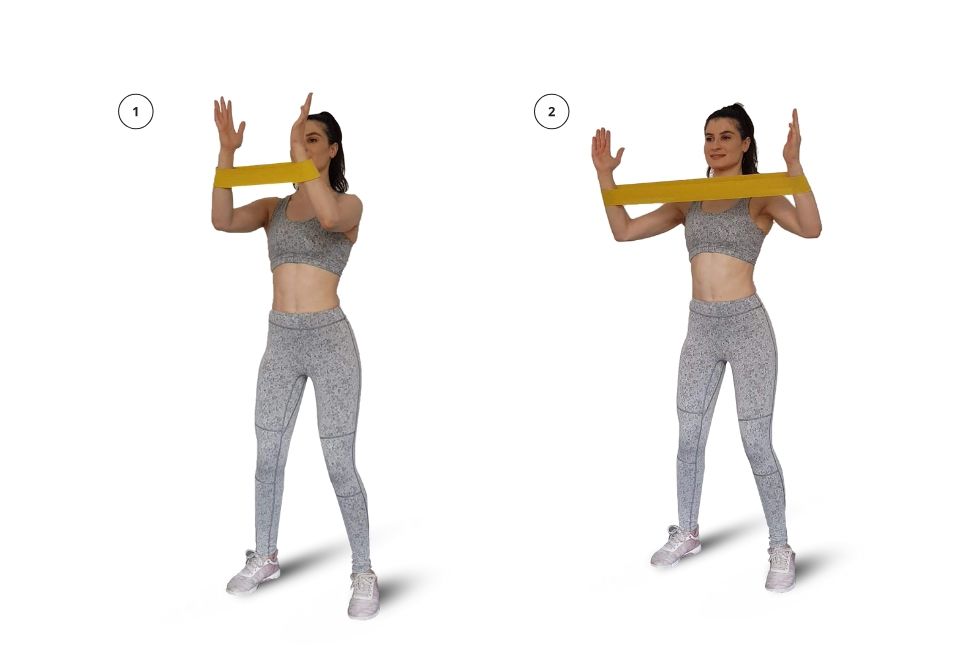
Weak mid-back muscles force your neck and shoulders to overwork, creating painful compensation patterns. These targeted physiotherapy exercises rebuild the muscular foundation that supports pain-free posture.
Resistance Band Rows for Scapular Stability
Anchor a resistance band at chest height. Step back until the band creates tension, then pull the handles toward your lower ribs while driving your elbows straight back. Focus on squeezing your shoulder blades together at the end position rather than just bending your arms. Perform 2 sets of 10 repetitions with controlled movement. This exercise directly targets the rhomboids and middle trapezius muscles that collapse when you slouch—key players in upper back pain relief.
Wall Angels for Postural Alignment
Stand with your back against a wall, feet positioned 6 inches from the baseboard. Bend your elbows to 90 degrees so your arms form “goal posts.” Slowly slide your arms upward while maintaining contact between your hands, elbows, and the wall throughout the movement. Lower with control. Complete 3 sets of 8 repetitions. Wall angels retrain proper scapular movement patterns that prevent the hunched posture causing your upper back pain.
Daily Stretching Protocol for Pain Prevention

Tight chest muscles pull your shoulders forward, increasing strain on upper back structures. These stretches restore muscle balance and prevent pain recurrence.
Doorway Chest Stretch Variation
Stand in a doorway with your right forearm against the doorframe, elbow bent at 90 degrees. Step forward with your left foot until you feel a stretch across your chest and front shoulder. Hold for 20-30 seconds while taking deep breaths. Repeat 2-3 times, then switch arms. For a deeper stretch, raise your arm to 120 degrees to target upper pectoral fibers. This simple physiotherapy exercise counteracts the forward shoulder position that contributes significantly to upper back pain.
Upper Trapezius Release Technique
Sit tall in a chair. Place your right hand behind your head and gently pull your right ear toward your right shoulder. Simultaneously, reach your left hand toward the floor to intensify the stretch along the side of your neck. Hold for 15-30 seconds, then switch sides. Perform 2 repetitions per side. This targeted stretch releases the overactive upper trapezius muscles that often refer pain between your shoulder blades.
Exercise Progression Roadmap

Building lasting resilience requires systematic advancement through difficulty levels. Rushing progression can worsen upper back pain, while moving too slowly delays recovery.
Beginner Phase (Days 1-14)
Focus exclusively on bodyweight exercises and light resistance (yellow Theraband). Perform your physiotherapy exercises for upper back pain 5 days per week for 10-15 minutes daily. Complete 1-2 sets of each exercise with perfect form—pain should decrease during movement, not increase. Document your pain levels before and after each session to track subtle improvements that motivate continued effort.
Intermediate Phase (Days 15-28)
Gradually increase resistance and add a third set to strengthening exercises. Introduce more challenging variations like kneeling rows or elevated push-ups. Monitor your body’s response closely—some muscle soreness is normal, but sharp pain indicates you’ve progressed too quickly. This phase builds the strength foundation necessary for long-term upper back pain relief.
Critical Warning Signs During Exercise
While these physiotherapy exercises generally provide upper back pain relief, your body communicates important safety signals that shouldn’t be ignored.
Immediate Stop Indicators
Discontinue any exercise if you experience sharp, shooting pain or neurological symptoms like numbness, tingling, or weakness in your arms. Pain that radiates around your chest or worsens with deep breathing requires immediate medical evaluation. These symptoms may indicate more serious conditions that require professional diagnosis before continuing with self-treatment.
Safe Modification Strategies
If standard exercises cause discomfort, reduce your range of motion by 25-50% initially. Perform movements only within pain-free zones, gradually expanding your range as mobility improves. Use pillows or rolled towels for additional support in positions that cause strain. Remember that physiotherapy for upper back pain should create positive change—not additional pain.
Professional Intervention Thresholds
Despite consistent home exercise efforts, some situations require professional physiotherapy guidance to prevent minor issues from becoming chronic problems.
Consultation Triggers
Schedule a physiotherapy assessment if you’ve completed 2 weeks of consistent exercise without noticeable improvement. Persistent pain that disrupts sleep or affects your work performance needs professional attention. Difficulty reaching overhead or limited neck rotation indicates mechanical restrictions that manual therapy can effectively address—key components of comprehensive upper back pain relief.
Consistent application of these physiotherapy exercises creates lasting upper back pain relief by addressing the root causes rather than just masking symptoms. Begin tomorrow with the morning mobility sequence, then systematically incorporate the strengthening circuit and stretching protocol into your daily routine. Remember that small, consistent efforts yield better long-term results than occasional intense sessions. Most importantly, listen to your body’s feedback—progress should feel challenging but never painful. If you don’t notice meaningful improvement within two weeks of dedicated practice, consulting a physiotherapist ensures you receive targeted treatment for your specific pain patterns, accelerating your path to a pain-free upper back.