
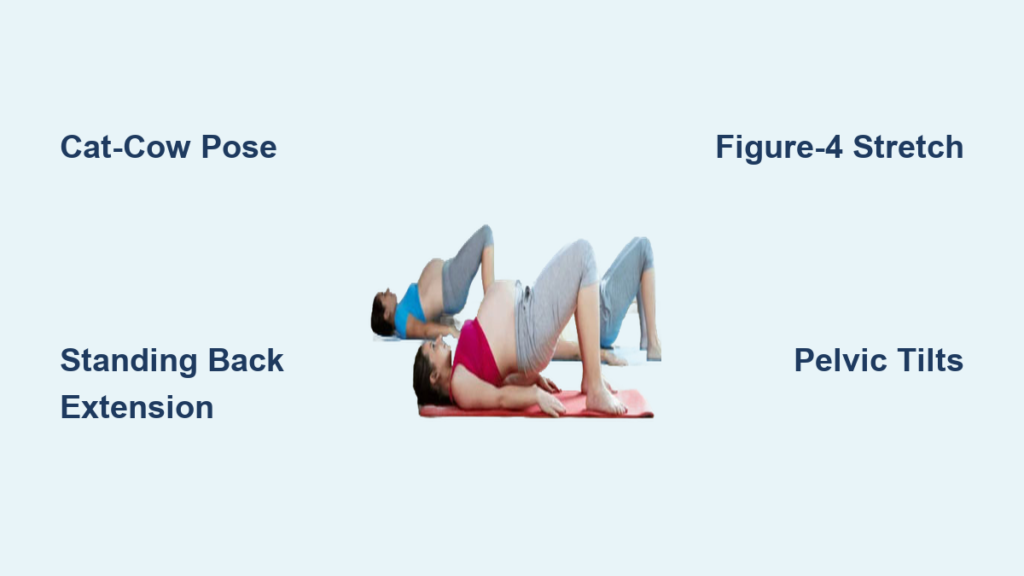
If you’re wincing when standing up or shifting positions constantly to find comfort, you’re part of the 50-70% of pregnant women who experience back pain. Your growing baby shifts your center of gravity forward while relaxin hormone loosens ligaments, creating the perfect storm for aching muscles and compressed nerves. The extra 25-35 pounds you’re carrying puts tremendous strain on your spine, especially as your posture adapts to accommodate your changing body.
The good news? You don’t have to suffer through medication or wait until delivery for relief. These pregnancy-safe stretches specifically target the unique causes of your back pain—whether it’s sciatica shooting down your leg, tight hip flexors from prolonged sitting, or that stubborn upper back tension from compensating for your growing belly. Within days of consistent practice, most expecting mothers notice significant improvement in their comfort levels.
Critical Safety Rules Before Starting Pregnancy Stretches
Your body undergoes dramatic changes during pregnancy that require special considerations for stretching. The relaxin hormone that prepares your pelvis for childbirth also increases your joint flexibility, making overstretching a serious risk. What felt comfortable before pregnancy might now push your ligaments beyond safe limits.
Immediate Warning Signs to Stop Stretching
Stop immediately if you experience dizziness, shortness of breath, chest pain, vaginal bleeding, or contractions during any stretch. These symptoms require immediate medical attention. Even if you’ve had uncomplicated pregnancies before, get clearance from your healthcare provider before starting any new stretching routine, especially if you have preeclampsia, placenta previa, cervical insufficiency, or risk of preterm labor.
Trimester-Specific Positioning Rules
After 20 weeks, avoid lying flat on your back for more than a minute—your growing uterus can compress major blood vessels, reducing blood flow to your baby. Instead, modify supine stretches by lying on your side or using pillows for support. During your third trimester, always have a chair or wall nearby when performing standing stretches to prevent falls as your balance shifts.
Cat-Cow Pelvic Rocks for Instant Spinal Relief
This gentle movement counteracts the forward-leaning posture that develops as your belly grows, directly addressing the root cause of most pregnancy-related back pain.
Begin on your hands and knees with wrists under shoulders and knees under hips. As you inhale, drop your belly toward the floor while lifting your head and tailbone—this is “cow” position. Then, as you exhale, round your spine upward like an angry cat, tucking your chin toward your chest. Move slowly through 10 repetitions, holding each position for 10-15 seconds while breathing deeply. This stretch improves circulation around your spine and specifically helps with round ligament pain that often accompanies lower back discomfort.
Pro Tip: Place a folded towel under your knees for extra cushioning as your pregnancy progresses.
Standing Back Extension for Workday Relief
This quick stretch provides immediate counteraction to the forward-leaning posture that develops from carrying your growing baby.
Stand with feet hip-width apart, placing your hands at the small of your back for support. Gently arch backward just slightly—never force this movement—using your hands as a guide rather than a push. Hold for 3-5 seconds, then return to neutral. Repeat up to 5 times throughout your day, especially after prolonged sitting. This subtle movement helps realign your spine and relieve pressure on compressed discs.
Warning: Avoid excessive arching—your goal is gentle correction, not deep backbending.
Seated Figure-4 for Sciatica Relief
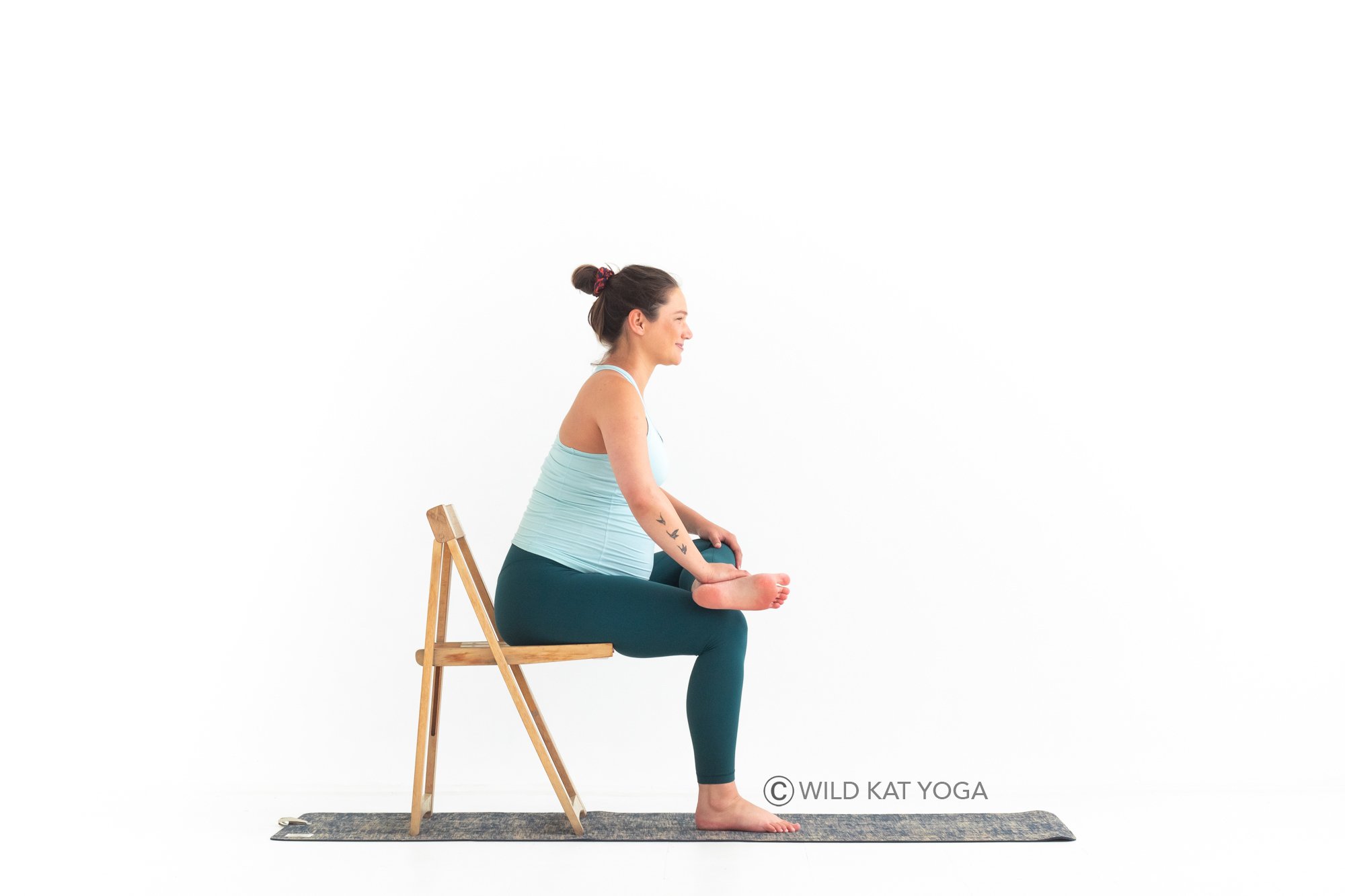
This targeted stretch directly addresses piriformis muscle tension that often compresses the sciatic nerve during pregnancy.
Sit on the edge of a sturdy chair with feet flat on the floor. Cross your right ankle over your left knee, creating a number “4” shape with your legs. Keep your back straight and gently lean forward from your hips until you feel a stretch in your right buttock—never force beyond mild tension. Hold for 15-30 seconds while breathing deeply, then switch sides. This stretch specifically targets the piriformis muscle that commonly irritates the sciatic nerve as your pelvis widens.
Modification: Place a pillow under your sitting bones if you feel pressure in your tailbone.
Modified Hip Flexor Lunge for Anterior Relief
Tight hip flexors pull your pelvis forward, worsening lower back strain—this stretch directly counteracts that tension.
Kneel on your right knee (place a folded towel underneath for comfort), stepping your left foot forward so both your left knee and hip form 90-degree angles. Gently press your hips forward while keeping your torso upright—you’ll feel the stretch in the front of your right hip. Hold for 30 seconds, then switch sides. Use a wall or chair for balance support as needed, especially in your third trimester.
Common Mistake: Avoid leaning forward with your upper body—keep your spine neutral to target hip flexors specifically.
Wall-Assisted Pelvic Tilts for Core Support
This foundational movement strengthens your deep core muscles while gently stretching tight lower back tissue.
Stand with your back against a wall, feet shoulder-width apart about 12 inches from the wall. Gently press the small of your back against the wall, engaging your transverse abdominis (your body’s natural corset muscle). Hold for several seconds, then release to neutral. Repeat 10 times, focusing on controlled movement rather than force. For variety, perform this sitting on an exercise ball, but have someone nearby for balance support after 20 weeks.
Key Benefit: This stretch builds the core strength necessary to support your changing center of gravity.
Supported Child’s Pose for Deep Relaxation
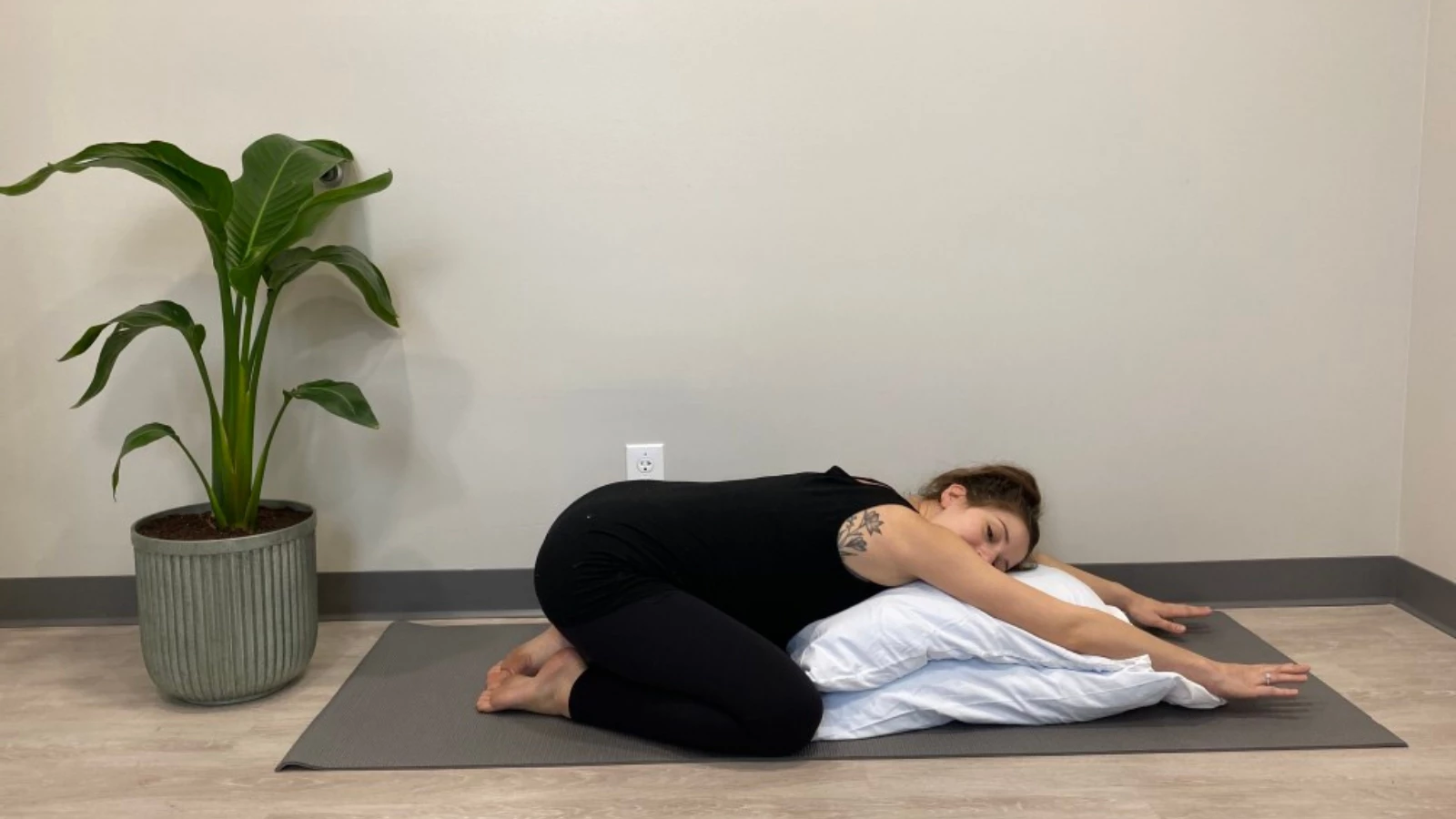
This restorative pose gently stretches your hips, pelvis, and spine while promoting overall relaxation—crucial for managing pregnancy-related muscle tension.
Kneel on all fours, then touch your big toes together while widening your knees to make space for your belly. Exhale and sit back toward your heels, lowering your chest toward the floor. Rest your forehead on stacked fists or a pillow, and extend your arms forward for a deeper stretch or rest them alongside your body for more relaxation. Hold for 5-10 deep breaths. Use an exercise ball instead of the floor by kneeling and placing your hands on the ball, then rolling it forward as you sit back.
Trimester Tip: In your third trimester, place a rolled towel under your forehead if reaching the floor becomes uncomfortable.
Doorway Chest Opener for Rounded Shoulder Relief
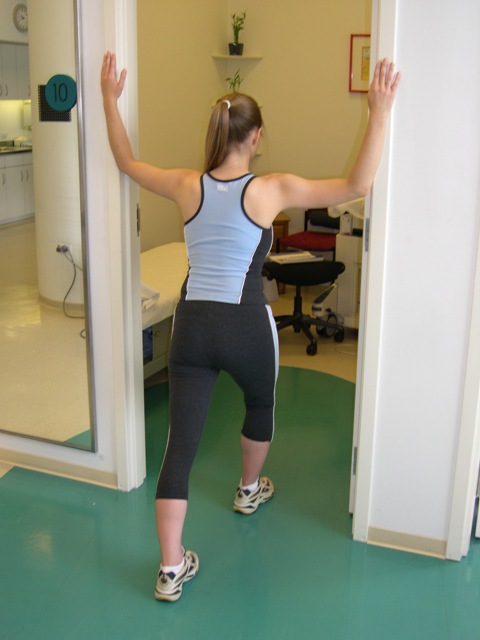
Pregnancy often creates upper back and shoulder tension as your posture adapts to your growing belly—this stretch directly counteracts that effect.
Stand in an open doorway. Place your hands on the door frame at shoulder height with elbows bent at 90-degree angles. Step forward gently until you feel a stretch across your chest and the front of your shoulders—never force beyond mild tension. Hold for 10-15 seconds, then step back. Repeat 3 times throughout your day, especially after prolonged computer work or driving.
Why It Works: This stretch counteracts the rounded shoulder posture that develops from carrying extra weight in front.
Levator Scapulae Neck Stretch for Upper Back Tension
This precise stretch targets the specific neck muscles that become overworked from compensating for your shifting center of gravity.
Sit or stand tall with good posture. Rotate your head 45 degrees to the right, then gently flex your neck forward, bringing your chin toward your right armpit. Use your left hand to gently guide the stretch if needed—never pull forcefully. Hold for 15-30 seconds, feeling the stretch along the left side of your neck. Switch sides and repeat. Perform this stretch whenever you notice tension building in your upper back or shoulders.
Warning: Stop immediately if you feel any numbness, tingling, or radiating pain—this indicates nerve irritation.
Butterfly Hip Opener for Pelvic Comfort
This gentle stretch opens your pelvic floor and hip joints, relieving pressure that contributes to lower back discomfort.
Sit with the soles of your feet together, knees bent out to the sides. Gently draw your feet closer to your pelvis while sitting tall on your sitting bones. Exhale and gently press your knees toward the ground using your elbows—never force this movement. Bend forward slightly at your hips while keeping your spine straight. Hold for 3-5 breaths, avoiding any overstretching sensation. This position brings valuable pelvic awareness and can be particularly helpful in the final weeks before delivery.
Progression: Place yoga blocks under your knees for support if you can’t lower them comfortably.
Optimal Daily Movement Habits to Prevent Back Pain
Prevention beats treatment every time. These simple daily habits reduce the likelihood of developing severe back pain in the first place.
Standing Posture Adjustments
Stand with shoulders back and down—not hunched forward—with knees slightly bent instead of locked. If standing for long periods, elevate one foot on a step stool and switch feet every 10-15 minutes. This simple adjustment reduces pressure on your lower back by 30%.
Sitting Modifications
Use a small pillow or lumbar support cushion behind your lower back to maintain your spine’s natural curve. Set a timer to get up and walk around every 30-45 minutes to prevent stiffness from prolonged sitting—your back muscles need movement to stay healthy.
Sleep Position Optimization
Sleep on your side with a pillow between your knees to keep your hips aligned. As pregnancy progresses, use additional pillows under your belly and behind your back for support. A supportive mattress makes a significant difference—consider adding a firm mattress topper if yours feels too soft.
When to Consult a Healthcare Professional
While these stretches help most pregnancy-related back pain, certain symptoms require immediate medical attention. Contact your healthcare provider if you experience sudden onset back pain, pain accompanied by bleeding or fever, or burning during urination. Persistent pain despite consistent stretching for 1-2 weeks also warrants professional evaluation.
Your OB-GYN may refer you to a physical therapist who specializes in prenatal care for personalized exercises tailored to your specific needs. Many women benefit from combining chiropractic adjustments with home stretching routines—just ensure your chiropractor has specific prenatal experience.
Quick Morning Relief Routine (5 Minutes)
Start your day with these three essential stretches to prevent all-day back pain:
- Cat-Cow: 10 repetitions (1 minute)
- Standing Back Extension: 5 repetitions (1 minute)
- Levator Scapulae Stretch: 30 seconds each side (1 minute)
- Wall-Assisted Pelvic Tilts: 10 repetitions (2 minutes)
This simple routine takes just five minutes but provides significant relief throughout your day. Consistency matters more than duration—performing these stretches daily yields better results than occasional longer sessions. Listen to your body’s signals, respect your limits, and adjust positions as needed throughout your pregnancy journey. Your growing baby deserves a comfortable, pain-free mama.