
Back pain stops many people in their tracks, but the right training for back pain can get you moving again—often without expensive treatments or medications. Whether you’re dealing with a recent strain or nagging discomfort that won’t quit, targeted exercises rebuild strength where you need it most. The key isn’t avoiding movement but doing the right movements at the right intensity.
This practical guide delivers exactly what works for most common back issues: simple exercises you can do anywhere, clear pain monitoring techniques, and a progressive plan that adapts as you heal. You’ll discover how to transform daily discomfort into reliable mobility through evidence-based training for back pain that respects your body’s natural healing process.
Most importantly, you don’t need special equipment or a gym membership—just a bed or floor space and willingness to commit to small, consistent efforts. Within days of starting proper training for back pain, many people notice reduced stiffness and improved movement, setting the stage for complete recovery.
Who Should Start This Back Pain Training Program
This training for back pain specifically helps people experiencing new back problems without specific medical instructions. If you’ve recently developed discomfort from daily activities, poor posture, or minor strains, these techniques address the root causes rather than masking symptoms.
Stop immediately and consult a professional if you experience:
– Sudden, severe pain during movement
– Numbness or tingling radiating down your legs
– Pain that intensifies significantly with basic movements
– New symptoms you’ve never felt before
If your back pain hasn’t improved after six weeks of consistent training for back pain, schedule a medical evaluation. Some conditions require specialized treatment beyond these general exercises.
How to Measure Pain During Back Training
Understanding your pain levels transforms training for back pain from guesswork to precision. Use this simple 0-10 scale where zero means no pain and ten represents the worst pain imaginable.
During exercise, keep pain between 0-5. This moderate discomfort indicates you’re working the right tissues without overloading them. If pain exceeds level five, reduce repetitions, slow your movements, or increase rest time between sets.
Morning-after check: Your pain shouldn’t be significantly worse the following day. Some muscle soreness is normal as your body adapts, but sharp back pain indicates you pushed too hard. This feedback loop ensures your training for back pain stays productive rather than causing setbacks.
Five Essential Back Pain Exercises That Actually Work
These movements form your foundation for recovery. Start with just two to three repetitions, focusing on smooth, controlled movements rather than quantity.
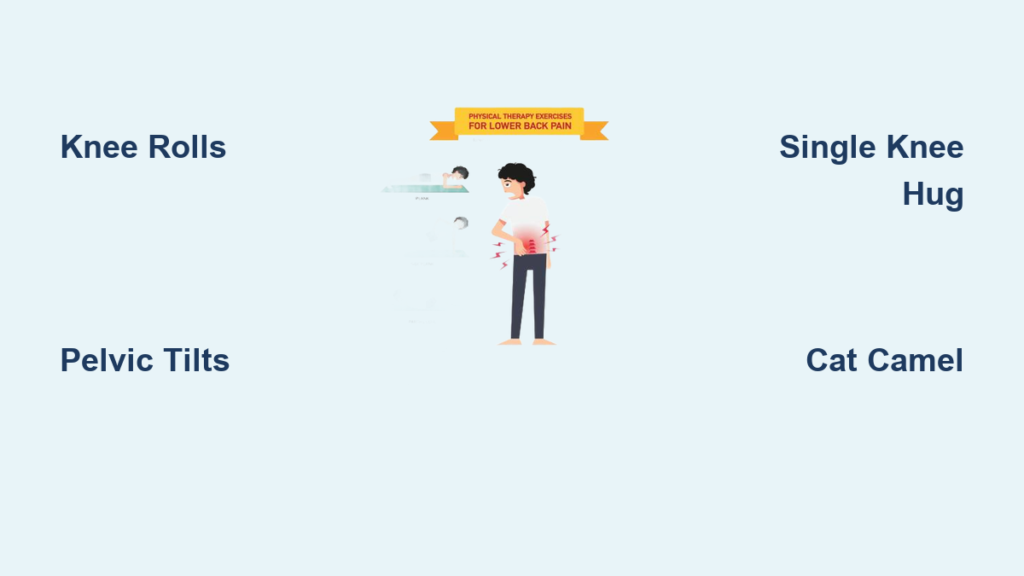
Knee Rolls: Restore Natural Spinal Rotation
Lie on your back with knees pointing upward. Slowly roll both knees to the right while keeping your shoulders flat on the surface, hold for three seconds, then return to center. Repeat to the left side. This gentle rotation mobilizes stiff spinal segments without strain.
Pro tip: Imagine your lower back is a book slowly closing to one side—keep the movement fluid and within comfortable limits. Each complete side-to-side movement counts as one repetition.
Pelvic Tilts: Build Core Stability From the Ground Up
While lying on your back, place your hands on your hip bones. Gently flatten your lower back into the surface by tilting your pelvis forward, hold for two seconds, then create a small space under your back by tilting backward.
Visual cue: Picture your pelvis as a bucket of water—tilt forward to pour water toward your feet, backward to pour it toward your head. This mental image helps isolate the correct movement pattern during training for back pain.
Single Knee Hug: Release Tight Hamstrings Causing Back Strain
Bring one knee toward your chest while keeping the other leg straight. Hold for five seconds, then slowly lower back down. Switch legs and repeat. This stretch targets hamstrings and glutes, which often pull on your lower back when tight.
Warning: If you feel nerve pain (sharp, shooting sensations), reduce how far you pull your knee toward your chest. Muscle stretch should feel like gentle tension, not nerve irritation.
Double Knee Hug: Decompress Your Spine Instantly
Hug both knees to your chest simultaneously. Use your hands to gently pull knees closer for a deeper stretch. Hold briefly, then release. This position creates space between vertebrae, relieving pressure on discs and nerves.
Modification: If hugging both knees causes discomfort, stick with the single-leg version until your back adjusts. Progress to double knee hugs when single-leg stretches feel comfortable.
Cat Camel: Mobilize Your Entire Spine Safely
Position yourself on hands and knees. Slowly arch your spine upward like an angry cat, tucking your chin toward your chest. Then drop your chest toward the floor while lifting your head slightly. Move smoothly between these positions.
Breathing guide: Exhale while arching up, inhale while dropping your chest down. This breathing pattern enhances spinal mobility and reduces strain during training for back pain.
Progressive Back Pain Training Schedule
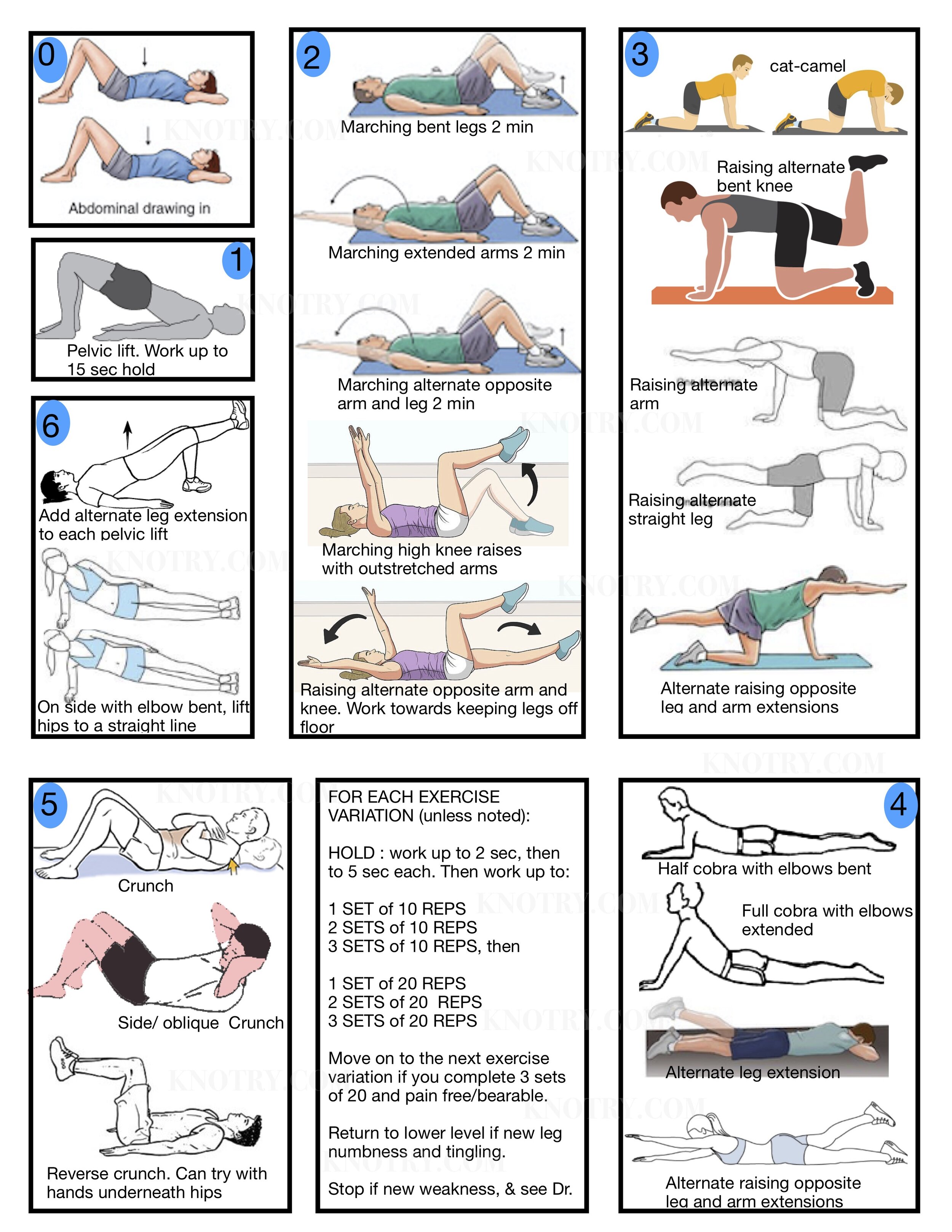
Start small and build gradually—this isn’t a race. Your tissues need time to adapt to new movement patterns.
Initial Phase (Week 1-2): Build Movement Confidence
- Perform 2-3 repetitions of each exercise
- Complete mini-sessions every hour throughout the day
- Focus on movement quality over quantity
- Expect slight increases in pain initially—this is normal adaptation
Building Phase (Week 3-4): Strengthen Supporting Muscles
- Increase to 8 repetitions per exercise
- Rest one minute between sets
- Perform two sets, 2-3 times daily
- Add one repetition every few days as exercises feel easier
Maintenance Phase (Week 5+): Prevent Future Episodes
- Work toward 2 sets of 15 repetitions
- Reduce frequency to once or twice daily
- Continue daily practice even after pain resolves
- Adjust intensity based on how you feel each day
Stretching Integration for Faster Back Pain Relief

Stretching complements your strengthening exercises by restoring flexibility to tight muscles that pull on your spine.
Start gently: You should feel a stretching sensation, never pain. If stretching causes sharp pain, back off immediately. Hold stretches for 20-30 seconds once you’re comfortable with the basic movements.
Timing matters: Perform 2-3 sets of each stretch, 2-3 times daily. Notice how your range of movement improves over time—this indicates your muscles are responding positively to the training for back pain.
Pro tip: Stretch after your strengthening exercises when muscles are warm, or during natural breaks in your day like after sitting for long periods.
Real-World Back Pain Training Implementation
You don’t need to complete every exercise in one session. Pick two movements that feel best and start there. Add others as your confidence and comfort increase.
Morning routine example:
– 5 pelvic tilts in bed before getting up
– 5 knee rolls while your coffee brews
– Single knee hug while watching news
Evening wind-down:
– Cat camel on the living room carpet
– Double knee hug while relaxing before bed
At work: Perform seated pelvic tilts while at your desk—no one will even notice you’re doing back pain training.
Signs Your Training for Back Pain Is Working
Track these positive indicators:
– Exercises feel easier to perform with less effort
– Morning stiffness decreases noticeably
– You move more freely throughout daily activities
– Pain episodes become less frequent or severe
Warning signs requiring adjustment:
– Pain that consistently worsens after exercise
– New symptoms like leg weakness or numbness
– Pain that interferes with sleep quality
– Inability to perform basic daily activities
Long-Term Back Pain Prevention Strategies
True success with training for back pain comes from making these exercises part of your lifestyle, not just a temporary fix.
Continue your routine:
– Perform exercises 3-4 times weekly for maintenance
– Increase repetitions before physically demanding days
– Scale back during periods of increased stress or poor sleep
Listen to your body:
– Adjust intensity based on daily pain levels
– Take rest days when needed
– Return to initial phase exercises during minor flare-ups
Remember, effective training for back pain is about building resilience through consistency, not achieving perfection. Small, regular efforts yield better results than sporadic intense sessions. Your back will thank you for the daily attention—and you’ll move through life with greater confidence and comfort. Start today with just two minutes of targeted exercises, and you’ll be on your way to lasting relief.