
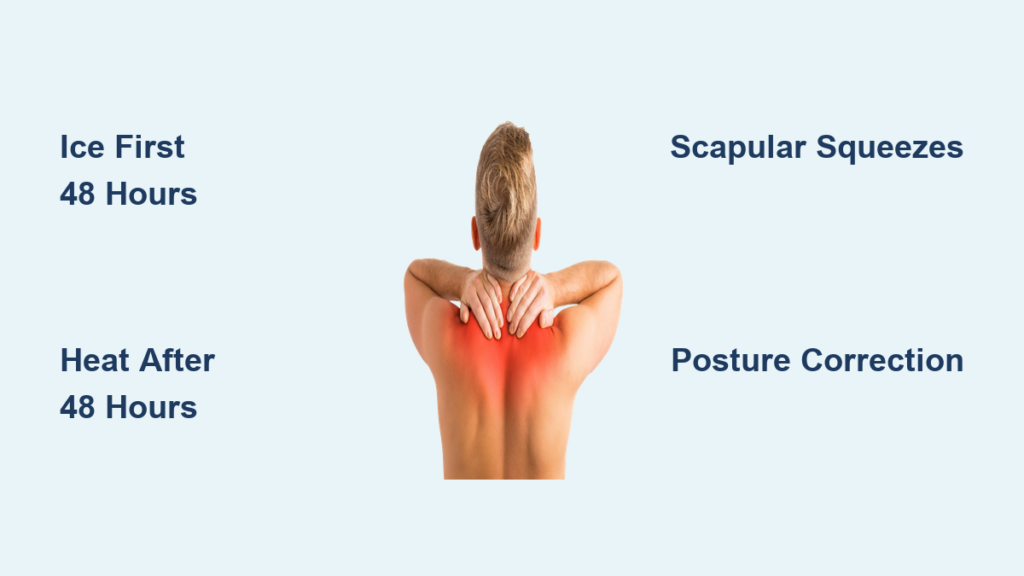
A sharp, stabbing pain locks your shoulder blades together as you reach for your laptop. Your breath catches. A rock-hard knot immobilizes your mid-back, turning simple movements into agony. If you’re searching for upper back pain muscle spasm solutions at 2 a.m., you’re not alone—up to 20% of women and 10% of men experience this debilitating spasm between the shoulder blades. Unlike strains involving actual tissue damage, these involuntary muscle contractions are your body’s protective overreaction to perceived threats. The good news? Most resolve within 4-6 weeks with targeted action. This guide delivers immediate relief steps, progressive exercises, and prevention strategies backed by clinical protocols. You’ll learn exactly how to break the spasm cycle and reclaim pain-free movement starting today.
What Your Upper Back Spasm Really Feels Like
Upper back muscle spasms create sudden, involuntary contractions in your thoracic region—typically between the shoulder blades—that range from mild twitches to rock-hard knots. These differ from strains because no actual muscle fiber damage occurs; instead, your body triggers a protective “brace” response to prevent further injury. The result? A cramping sensation that can lock your posture and radiate pain during everyday motions like breathing or turning your head.
Common Pain Patterns You’re Experiencing
- Sharp stabbing or cramping pain when reaching overhead or twisting
- A marble-sized knot you can feel under the skin near your spine
- Restricted breathing when intercostal muscles spasm during deep inhales
- Radiating discomfort into your neck, chest wall, or arms
- Stiffness that prevents you from touching your toes or rotating your head fully
How Severe Is Your Spasm?
- Mild: Dull ache relieved by heat or movement; predictable during screen time
- Moderate: Limited arm reach, partial relief with OTC meds, pins-and-needles in chest
- Serious: Constant severe pain, inability to lie flat, or numbness/tingling in arms (seek immediate care)
Why Your Upper Back Muscle Spasm Actually Happened
Your spasm didn’t strike randomly—it’s your body’s alarm system responding to specific triggers. Understanding these causes is critical for stopping the current spasm and preventing recurrence. Most cases stem from mechanical stressors combined with hidden physiological factors that deplete muscle resilience.
Posture & Movement Triggers You Can Fix Today
- Forward head posture from phone/screen use (adds 10+ lbs of strain per inch your head drifts forward)
- Repetitive typing without shoulder blade engagement
- Sudden twisting while lifting groceries or suitcases
- Prolonged sitting beyond 60 minutes without breaks
- Poor lifting mechanics like bending at the waist instead of knees
Hidden Contributors You’re Overlooking
- Dehydration reducing electrolyte levels (especially magnesium for muscle function)
- Chronic stress creating baseline tension in trapezius and levator scapulae muscles
- Vitamin D deficiency impairing calcium absorption for muscle contraction
- Weak core muscles forcing upper back muscles to overwork during basic movements
- Sedentary lifestyle causing deconditioning of rhomboids and serratus posterior
Critical Symptom Check Before Self-Treating

Not all upper back pain muscle spasms require the same approach. These quick tests determine whether home care is safe or if you need emergency intervention. Skip this step and you risk worsening injuries like disc lesions or cardiac issues.
Red Flags: Stop and Seek Immediate Care If You Have
- Chest pain or pressure accompanying back pain (rule out cardiac events)
- Numbness/tingling in arms or chest wall (indicates nerve compression)
- Loss of bladder/bowel control (signals cauda equina syndrome)
- Fever with back pain (suggests infection)
- Inability to stand due to pain after minor trauma
Self-Assessment Tests to Confirm Muscle Spasm
Twist Test: Sit upright, slowly rotate torso left/right while inhaling deeply. Pain or restriction on one side confirms muscle involvement.
Side Bend Test: Gently bend sideways while seated. Compare flexibility—reduced motion with pain indicates spasm.
Breathing Test: Take deep breaths. Pain during inhalation points to intercostal muscle spasm.
Immediate Relief Protocol for First 48 Hours
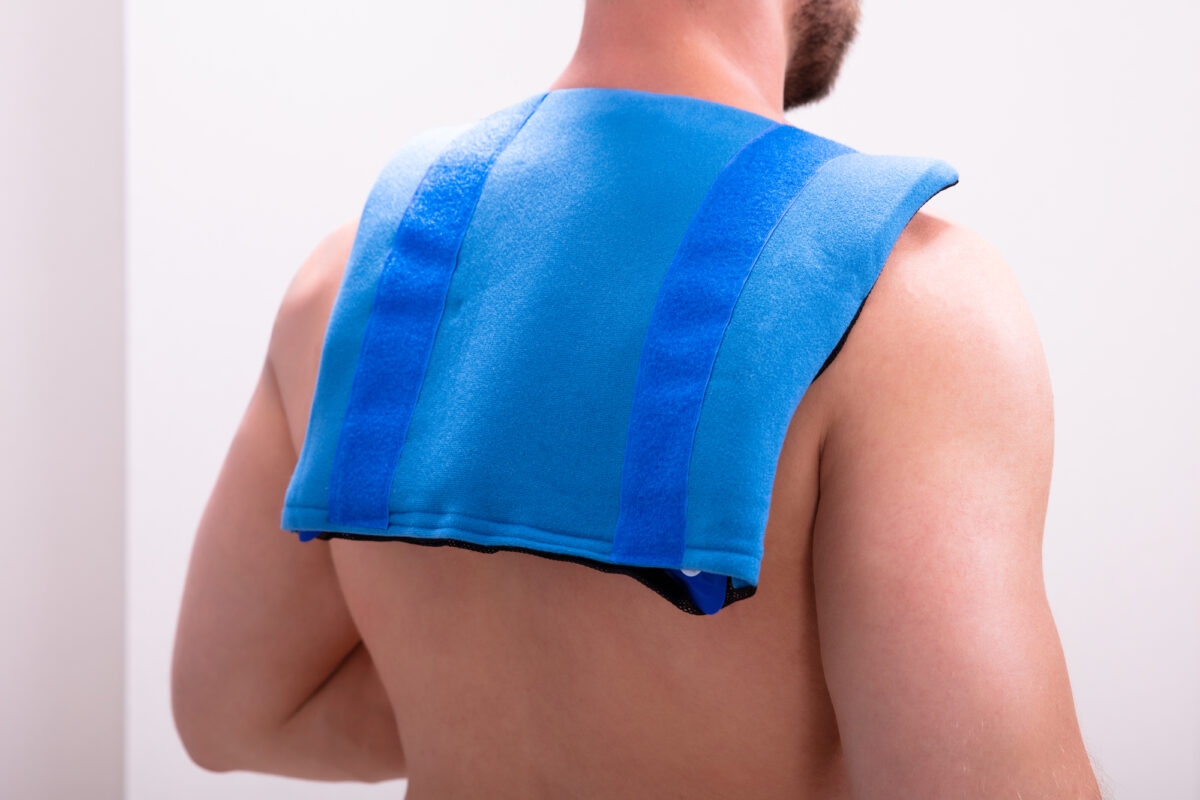
Act fast within this critical window to reduce inflammation and break the spasm cycle. Delaying treatment turns acute spasms into chronic pain patterns. Follow this phased approach based on clinical guidelines for optimal healing.
Ice Phase: First 48 Hours (Stop Inflammation)
- Apply ice pack wrapped in thin towel for 20 minutes on, 20 off
- Target the knot and surrounding area (trapezius/rhomboid junction)
- Repeat 3-4 times daily—more frequent application disrupts healing
- Never apply ice directly to skin; frostbite risk increases after 20 minutes
Heat Phase: After 48 Hours (Unlock Stiffness)
- Switch to moist heat once inflammation subsides (warm shower > dry heating pad)
- Focus warm stream on upper back for 10-15 minutes during morning routine
- Use low-setting heating pad for 20-minute sessions—high heat increases swelling
- Try warm bean bag for flexible contouring around shoulder blades
Smart Pain Management (Avoid Common Mistakes)
- Wait 48 hours before NSAIDs—early anti-inflammatories disrupt natural healing
- Use acetaminophen for pain if NSAIDs cause stomach issues
- Massage gently with light fingertip pressure—deep tissue worsens acute spasms
- Rest in neutral spine position: Lie on back with pillow under knees and rolled towel under neck
Progressive Recovery Exercises That Actually Work
Don’t jump into aggressive stretching—that’s how minor spasms become chronic injuries. Follow this phased exercise protocol used in physical therapy clinics to rebuild mobility without flare-ups.
Week 1: Gentle Mobility (Pain-Free Movement Only)
Scapular Squeezes
– Sit tall with elbows bent 90°
– Gently squeeze shoulder blades together (imagine holding pencil between them)
– Hold 5 seconds, release slowly—never force range
– Do 10 reps, 3x daily while watching TV or working
Neck Rotations with Hand Assist
– Place right hand on left cheekbone
– Gently rotate head right against light hand resistance
– Hold 20 seconds breathing deeply—stop if pain increases
– Repeat 2x per side, twice daily
Week 2-4: Strength Building (Prevent Recurrence)
Thoracic Extensions Over Foam Roller
– Position roller horizontally at bra-line level
– Support head with hands, gently arch upper back over roller
– Hold 10 seconds returning slowly to neutral—keep lower back still
– Do 8 reps daily to restore spinal mobility
Door Frame Chest Stretch
– Place forearms on frame at 90° elbow angle
– Step forward until stretch hits chest—not shoulders
– Breathe into tight side for 30 seconds—stop if shoulder clicks
– Repeat 3x, twice daily to counteract forward posture
Prevent Future Spasms With Daily Habits
Most people treat the spasm but ignore the root causes—guaranteeing recurrence. These evidence-based habits address the posture, nutrition, and movement flaws that trigger spasms.
Daily Posture Habits That Stop Spasms
- Monitor positioning: Top screen edge at eye level—use books or stands
- 90-90-90 rule: Elbows, hips, knees all bent 90° when seated
- Micro-breaks: Stand/walk 2 minutes every 30 minutes of sitting
- Lumbar support: Use rolled towel to maintain spine’s natural curve
Lifestyle Tweaks for Muscle Resilience
- Hydration target: 2-3 liters daily + electrolytes (add pinch of salt to water post-workout)
- Stress management: 5-minute box breathing (4-7-8 pattern) every 2 hours
- Exercise minimum: 3x weekly 15-minute back/core routines (planks, rows)
- Sleep setup: Side-sleepers use pillow between knees; back-sleepers keep small towel under neck
Nutrition That Calms Muscle Spasms
- Magnesium sources: Spinach (1 cup = 157mg), almonds (1 oz = 80mg)
- Potassium boost: Bananas (1 medium = 422mg), sweet potatoes (1 cup = 541mg)
- Vitamin D: 10-15 minutes midday sun or fatty fish 2x/week
- Calcium pairing: Dairy with vitamin C foods (e.g., yogurt + berries) for absorption
When to Expect Recovery (Realistic Timeline)
Healing isn’t linear—knowing these milestones prevents frustration and re-injury. Push too hard too soon and you’ll reset your progress by weeks.
Healing Phases to Track
- Week 1: Pain intensity drops 50% with proper ice/heat cycling
- Weeks 2-4: Full head rotation returns; light strength work begins
- Weeks 4-6: Resume gym workouts with modified form
- 6+ weeks: Return to sports with proper warm-up protocols
Green Lights to Progress Exercises
- Pain-free deep breathing during all movements
- Daily tasks completed without evening stiffness
- 80% strength symmetry (test by squeezing tennis ball equally both sides)
- No pain during scapular clock exercises
Key Takeaways for Lasting Relief
Your upper back pain muscle spasm is a warning—not a life sentence. Most resolve within 4-6 weeks by combining immediate ice/heat protocols with posture correction and targeted exercises. Start today with the Twist Test to confirm muscle involvement, then implement the Week 1 mobility routine. Remember: never stretch aggressively during acute spasms, and always rule out red flags first. The real victory comes from addressing hidden causes—correct your screen posture, hit your hydration target, and add magnesium-rich foods. Within weeks, those rock-hard knots between your shoulder blades will fade as your muscles learn to move freely again. Your spine thrives on motion; give it the support and strength it needs, and pain-free movement becomes your new normal.