
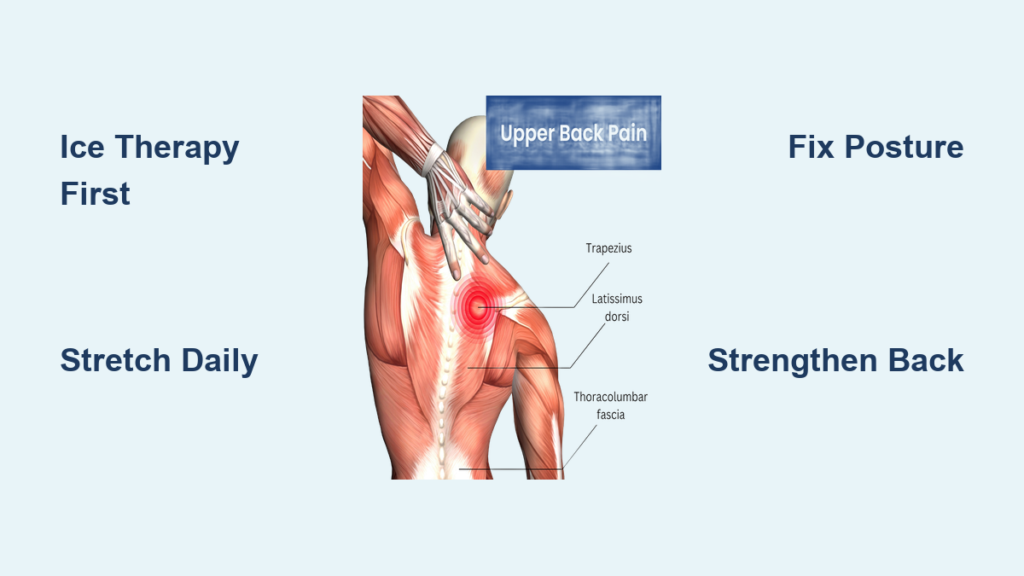
That sharp twinge between your left shoulder blade and spine isn’t just an annoyance—it’s your body’s urgent warning signal. Upper left back muscle pain strikes without warning during mundane activities: reaching for a high shelf, cradling your phone during a long call, or even sleeping in an awkward position. The good news? Over 90% of cases stem from muscle strain or postural issues that respond well to targeted self-care. You don’t need expensive treatments to regain comfort—you need the right approach applied at the right time.
Whether you’re nursing a fresh strain from weekend gardening or battling chronic tension from years at a desk, this guide delivers actionable solutions. You’ll discover exactly how to pinpoint the cause of your discomfort, distinguish harmless strains from serious conditions, and implement clinically proven strategies for rapid relief. Most importantly, you’ll learn the simple daily habits that prevent recurrence—so you can finally stop dreading that familiar ache.
Identify Your Pain Type Quickly
Acute vs Chronic Muscle Strain
Acute upper left back muscle pain announces itself within 24 hours of overexertion or sudden movement. Picture the sharp stab you felt when lifting that heavy box with twisted form or sleeping on your stomach. This pain intensifies with specific motions like twisting or reaching overhead. Chronic tension develops insidiously, creating a persistent dull ache that may spread across your entire upper back. It typically stems from prolonged poor posture—like hunching over a keyboard for hours—which gradually fatigues muscles until they rebel.
Red Flag Symptoms to Watch
Certain symptoms demand immediate medical evaluation. Seek urgent care if you experience:
– Severe pain rated 9-10/10 that prevents basic movement
– Progressive arm weakness or numbness spreading down your left arm
– Loss of bladder/bowel control (indicates potential spinal cord compression)
– Fever with muscle pain or unexplained weight loss
These could signal nerve compression, infection, or other serious conditions requiring professional intervention.
Pain Pattern Recognition
Track your pain’s behavior like a detective. Morning stiffness that eases after moving suggests inflammatory arthritis. Pain worsening through the workday points to postural strain from desk work. Constant aching without movement triggers may indicate myofascial pain syndrome with active trigger points. Note positions that relieve discomfort—lying prone might ease muscle strain while sitting upright could worsen it. This pattern mapping is crucial for selecting effective treatments.
Immediate Pain Relief Strategies

First 48-Hour Protocol
For new upper left back muscle pain, switch to ice therapy immediately. Apply a cold pack wrapped in a thin towel for 15-20 minutes every 2-3 hours during the first two days. This reduces inflammation and numbs nerve endings. Pair this with active rest: avoid aggravating movements like heavy lifting, but take short walks every hour to maintain blood flow. Complete immobilization actually delays healing by restricting oxygen-rich blood to damaged tissues.
Fast-Acting Medications
Start with 400mg ibuprofen every 6 hours (max 2400mg daily) to combat inflammation—the root cause of most acute strains. If stomach sensitivity is a concern, switch to acetaminophen (650mg every 6 hours, max 3000mg daily). For localized relief, apply menthol-based creams like Biofreeze 4 times daily—they create a cooling sensation that overrides pain signals without systemic side effects. Avoid heating pads during this phase, as heat can worsen inflammation in fresh injuries.
Emergency Stretch Routine
Perform these hourly while pain is acute:
1. Wall Angels: Stand with back against wall, arms bent at 90 degrees like goalposts. Slowly slide arms upward while maintaining contact, then lower (10 reps).
2. Shoulder Blade Squeezes: Sit tall, squeeze shoulder blades together as if holding a pencil, hold 5 seconds (15 reps).
3. Chin Tucks: Gently retract chin straight back (like making a “double chin”), hold 5 seconds (10 reps).
These micro-stretches maintain mobility without straining healing tissues. Stop immediately if pain increases beyond mild discomfort.
Home Treatment That Works
DIY Massage Techniques
Grab a tennis ball for instant trigger point relief. Position it between your left shoulder blade and spine against a wall, then lean in gently. Roll slowly for 90 seconds over tender spots—you’ll feel distinct “knots.” Follow with the doorway pec stretch: place forearm against doorframe, gently rotate chest forward until you feel a stretch across your chest (hold 30 seconds per side). This counteracts the rounded-shoulder posture that often causes upper left back muscle pain.
Heat Therapy Applications
After day 3, transition to heat therapy. Soak in a warm bath with 2 cups Epsom salts for 20 minutes—magnesium absorption reduces muscle spasms. Alternatively, microwave a damp towel for 60 seconds and apply for 15 minutes. Moist heat (like warm showers) penetrates deeper than dry heating pads. Never apply heat during the acute inflammatory phase (first 48 hours), as it can increase swelling.
Self-Care Toolkit Essentials
Keep these three items within arm’s reach:
– Foam roller for daily thoracic extensions (5 minutes lying perpendicular on roller)
– Resistance bands for seated rows (2 sets of 15 reps daily)
– Contoured cervical pillow to maintain neck alignment during sleep
This trio addresses the core causes: muscle tightness, weakness, and poor spinal support—halting the pain cycle before it starts.
Correct Posture Problems Fast
Workplace Ergonomics Fix

Your workstation is likely fueling your upper left back muscle pain. Position your monitor so the top third sits at eye level—this prevents forward head posture that strains neck muscles. Adjust your chair height until elbows form 90-degree angles with shoulders relaxed. Place feet flat on the floor (use a footrest if needed) and position your keyboard directly in front of your body to avoid reaching. These tweaks reduce strain by 40% according to ergonomic studies.
Sleep Position Corrections
Side sleepers: place a pillow between your knees and ensure your head pillow fills the gap between shoulder and ear. Back sleepers: roll a small towel under your neck’s natural curve. Replace mattresses older than 7 years—they lose supportive integrity, forcing muscles to work overnight. Avoid stomach sleeping entirely; it hyperextends the spine and rotates the neck, directly aggravating upper left back pain.
Daily Posture Habits
Set phone alarms for hourly “posture resets”: stand tall, roll shoulders back 10 times, then perform wall angels (5 reps). During TV commercials, do seated scapular retractions—squeeze shoulder blades together while maintaining chin tuck. These micro-corrections retrain your neuromuscular system, preventing the postural collapse that reignites pain. Consistency matters more than duration: 20 seconds hourly beats one 10-minute session daily.
Strengthening Exercises That Heal
Beginner Recovery Routine
Start with scapular retractions: sitting upright, squeeze shoulder blades together without shrugging (hold 5 seconds, 15 reps). Progress to wall angels once acute pain subsides—maintain contact from head to heels while sliding arms up/down (10 slow reps). These activate dormant mid-back muscles that support your spine, reducing strain on overworked upper traps. Perform daily for fastest results.
Intermediate Rehabilitation
Add resistance band rows: anchor band at chest height, pull elbows back while squeezing shoulder blades (3 sets of 12 reps). Pair with bird-dog exercises: on hands and knees, extend opposite arm/leg while keeping spine neutral (hold 5 seconds per side, 10 reps). This builds stability in deep spinal muscles often neglected in traditional workouts—critical for preventing recurring upper left back muscle pain.
Advanced Prevention Program
Once pain-free, incorporate prone Y-T-W raises: lie face-down on bench, lift arms to form each letter (10 reps each). Finish with farmer’s carries: hold light dumbbells (5-10 lbs), walk 30 seconds while maintaining tall posture. These target the serratus anterior and lower trapezius—the unsung heroes of upper back health—creating lasting resilience against future strains.
When to See a Doctor
Warning Signs Timeline
Seek evaluation if pain persists beyond 6 weeks despite consistent home treatment, or if you experience progressive arm weakness, night pain that disrupts sleep, or pain following trauma like a fall. Persistent tingling in your left hand or worsening symptoms despite rest also warrant professional assessment—these may indicate nerve compression requiring specialized care.
Diagnostic Process Expectations
Your doctor will start with a detailed history and physical exam: palpating tender points, testing range of motion, and checking neurological function. X-rays rule out bone issues but won’t show muscle problems—reserve MRI for cases with neurological symptoms. Most muscle strains don’t require imaging; diagnosis is typically clinical based on your symptom pattern and physical findings.
Treatment Escalation Options
Physical therapy provides hands-on relief through manual therapy and customized exercise programs. For stubborn muscle spasms, trigger point injections with lidocaine offer immediate relief. Prescription muscle relaxants like cyclobenzaprine (5-10mg) may be used short-term, but they’re secondary to movement-based therapies for lasting recovery.
Prevention Strategies That Last
Daily Maintenance Routine
Dedicate 5 minutes each morning to thoracic extensions over a foam roller and doorway pec stretches. During work breaks, perform seated rows with resistance bands (2 sets of 15). These habits maintain muscle balance—critical for preventing the postural strain that causes 70% of upper left back muscle pain cases. Consistency trumps intensity; 5 minutes daily beats one-hour weekly sessions.
Environmental Modifications
Upgrade to an ergonomic chair with adjustable lumbar support if you sit >4 hours daily. Position frequently used items (phone, mouse) within 16 inches of your body to avoid reaching. Consider a standing desk converter—alternating positions every 30 minutes reduces static muscle loading by 60%. These changes address the root cause: sustained poor posture during daily activities.
Long-term Habit Changes
Schedule monthly maintenance massages to prevent tension buildup before it becomes painful. Invest in semi-annual mattress evaluations—replace when sagging exceeds 1.5 inches. Replace pillows annually; flattened pillows force neck muscles to overwork overnight. Pair these with twice-weekly strength training focusing on back and core muscles for comprehensive protection against recurrence.
Recovery Timeline Expectations
Week 1-2: Acute Phase
Expect 50-75% improvement with proper ice therapy, gentle movement, and NSAIDs. Focus on reducing inflammation while maintaining pain-free mobility. Avoid overhead activities and heavy lifting. Most acute strains show significant progress within 10 days when treated correctly—delayed improvement warrants medical evaluation.
Week 3-6: Subacute Phase
Gradually introduce strengthening exercises like resistance band rows and wall angels. Increase activity duration by 10% daily—pain should never exceed 2/10 during movements. By week 4, most people return to normal activities with proper pacing. This phase builds tissue resilience; rushing it risks re-injury and chronic pain development.
6+ Weeks: Chronic Management
For persistent cases, implement comprehensive rehabilitation: combine daily foam rolling, 3x weekly strength sessions, and posture awareness drills. Full recovery may take 3-6 months, but functional improvement typically occurs within 8 weeks. Chronic pain requires addressing underlying factors like workplace ergonomics or sleep posture—symptom management alone won’t resolve the root cause.
Upper left back muscle pain rarely signals danger, but ignoring it invites chronic discomfort. Start with 48 hours of targeted ice therapy and gentle movement, then systematically progress through strengthening and postural corrections. Most cases resolve completely within 4-6 weeks when addressed with this phased approach. Remember: daily micro-habits like hourly posture resets and foam rolling prevent the cumulative strain that creates this pain. Your path to lasting relief begins not with a single heroic effort, but with consistent, intelligent action applied every day.