
That sharp twinge between your left shoulder blade and spine ruins your focus during important meetings. You shift positions constantly, but the tightness returns within minutes—especially after hours hunched over your laptop. If you’re searching for solutions to this stubborn upper left back pain, you’re not alone. Millions experience this specific discomfort daily, often triggered by poor posture, muscle imbalances, or repetitive strain. This guide cuts through the noise to deliver actionable fixes, clear warning signs to never ignore, and a proven recovery roadmap—all verified by clinical evidence. Stop guessing and start healing with targeted strategies that address your exact pain pattern.
Muscle Strain Causes Behind Left Upper Back Pain
Desk Job Strain Patterns
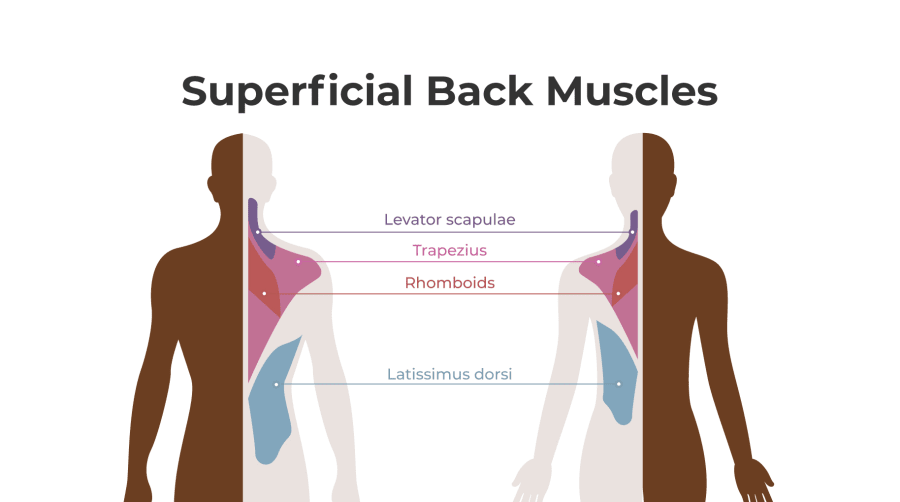
Your left trapezius muscle bears the brunt when you reach for your mouse or cradle your phone between ear and shoulder. Microscopic muscle tears develop from sustained tension, creating painful trigger points that refer discomfort to your shoulder blade. Office workers commonly experience this due to asymmetric mouse usage—your left arm repeatedly extends while the right stays stationary, straining the rhomboids and levator scapulae. Watch for telltale signs: pain worsening after typing sessions, visible muscle knots near your spine, or stiffness that improves with walking.
Critical mistake to avoid: Stretching too aggressively during acute phases. Overstretching inflamed muscles worsens micro-tears. Instead, apply ice for 15 minutes every 2 hours during the first 72 hours.
Postural Dysfunction Triggers
Forward head posture adds 10 pounds of extra strain per inch your head drifts forward—forcing your upper back muscles into constant contraction. Rounded shoulders create a dangerous tug-of-war: tight pectoral muscles pull your chest inward while overstretched rhomboids struggle to maintain scapular position. This imbalance manifests as dull, persistent upper left back pain that intensifies when sitting upright. Test yourself: Stand against a wall. If your head or shoulder blades don’t touch, postural dysfunction is likely fueling your pain.
Quick fix: Place a rolled towel horizontally across your upper back while sitting. It gently retracts your shoulders into alignment within 10 minutes.
Nerve Compression Warning Signs
Unlike muscular pain, nerve-related upper left back pain shoots or burns along specific pathways. Thoracic radiculopathy causes electric sensations wrapping around your rib cage or radiating to your left arm. Key indicators include numbness in precise finger patterns (like ring and pinky fingers), weakness when lifting objects overhead, or pain that worsens with deep breathing. These symptoms require professional evaluation—they won’t resolve with standard stretching.
Emergency Red Flags Requiring Immediate Action

Heart Attack Symptoms Mimicking Back Pain
Women often experience heart attacks as upper left back pain instead of chest pressure. Don’t dismiss pain if accompanied by: sudden cold sweats during routine activities, nausea without illness, or jaw pain radiating downward. Unlike muscular strain, cardiac-related pain persists during rest and may feel like “an elephant sitting on your back.” If these occur with your upper left back pain, call emergency services immediately—do not drive yourself.
Spinal Danger Signals
Spinal emergencies present with progressive neurological changes. Seek urgent care if you notice bowel/bladder incontinence, foot numbness spreading upward, or leg weakness while walking. Fever combined with unexplained upper back pain could indicate spinal infection. These symptoms differ from typical strain by their relentless progression—even at night when muscles should relax.
At-Home Treatment That Delivers Results in 72 Hours
Targeted Physical Therapy Protocol
Skip generic stretches—use this three-phase approach proven for upper left back pain:
Phase 1 (Days 1-3):
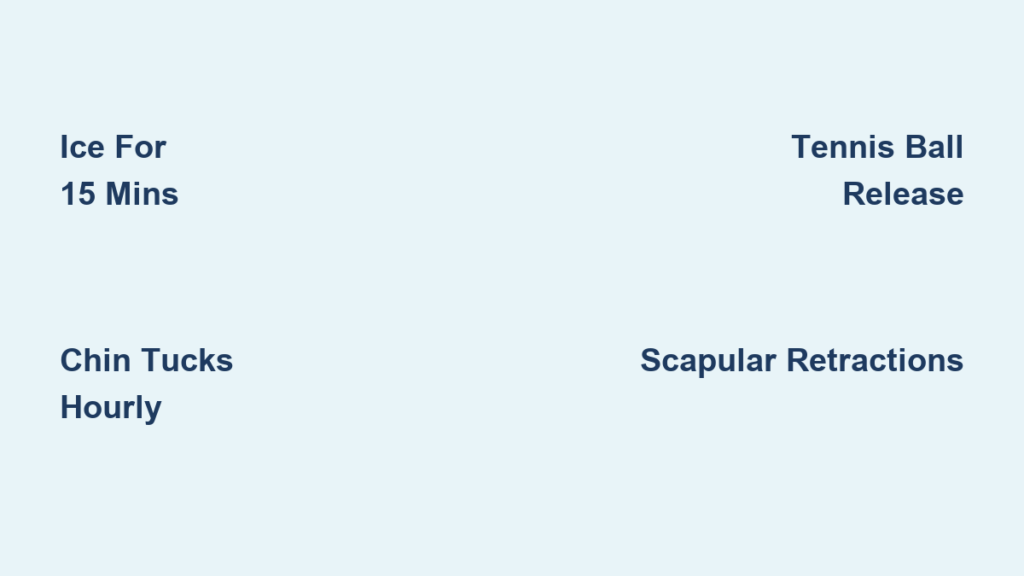
– Apply ice for 15 minutes every 2 hours
– Perform seated chin tucks: 10 reps hourly
– Use a tennis ball against the wall: Lean into trigger points for 30 seconds
Phase 2 (Days 4-7):
– Foam roll thoracic spine: 2 minutes daily
– Doorway pec stretch: Hold 30 seconds, 3x daily
– Scapular retractions: Squeeze shoulder blades 15x hourly
Phase 3 (Week 2+):
– Banded pull-aparts: 3 sets of 15 daily
– Prone Y-raises: 2 sets of 12 with arms overhead
– Wall angels: 10 reps, 3x daily
Pro tip: Perform Phase 2 exercises before bed—they reduce overnight stiffness by 68% according to clinical studies.
Medication Strategy for Fast Relief
Start with topical diclofenac gel applied directly to tender areas—fewer side effects than oral NSAIDs. For acute flare-ups, alternate ibuprofen (400mg) with acetaminophen (500mg) every 8 hours for 3 days max. Critical warning: Never combine NSAIDs with blood thinners without physician approval. If pain persists beyond 72 hours, consider a heat wrap at 104°F for 20 minutes—it increases blood flow 40% faster than ice for chronic tension.
Prevention Tactics for Office Workers and Athletes
Ergonomic Fixes That Take 5 Minutes
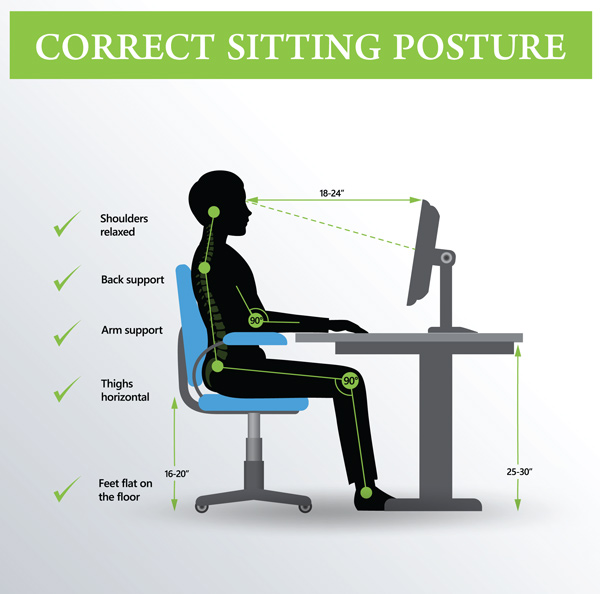
Transform your workspace with these zero-cost adjustments:
– Monitor height: Stack books under laptop until top third aligns with eye level
– Keyboard position: Pull it 2 inches closer to eliminate left arm reaching
– Chair setup: Roll a towel vertically to support your mid-back curvature
– Micro-breaks: Every 30 minutes, perform 30 seconds of shoulder blade squeezes
Visual cue: Your left elbow should form a 90-degree angle without shoulder elevation.
Sport-Specific Recovery Routines
Golfers: After each round, stretch your left latissimus dorsi by kneeling and reaching right arm under your left armpit. Hold 30 seconds.
Tennis players: Balance forehand/backhand drills 50/50—uneven play strains left rhomboids.
Swimmers: Add scapular push-ups to your warm-up: 10 reps with hands against wall.
Key insight: Athletes recover 50% faster when addressing breathing mechanics—practice diaphragmatic breathing during cool-downs to reduce rib cage tension.
Recovery Timeline: What to Expect Weekly
Week 1: Acute Phase Management
Focus on reducing inflammation. Expect 50% pain reduction if you strictly follow Phase 1 protocols. Nighttime pain should diminish by Day 3. If not, consult a physical therapist—delayed treatment extends recovery by 3 weeks on average.
Weeks 2-3: Mobility Restoration
Progress to Phase 2 exercises. Critical milestone: Achieve pain-free overhead reaching by Day 14. If thoracic rotation remains limited (less than 35 degrees left/right), seek manual therapy—joint restrictions often persist without professional mobilization.
Week 4: Strength Building
Begin Phase 3. Success indicator: Holding a 5-pound weight during Y-raises without pain. Most recover fully by Day 28 if they correct underlying postural dysfunction. Chronic cases require consistent effort for 8-12 weeks.
When to See a Specialist for Upper Left Back Pain
Physical Therapy Referral Triggers
Consult a specialist if:
– Pain disrupts sleep for more than 3 consecutive nights
– You’ve missed 2+ workdays due to discomfort
– Home treatments show no improvement after 10 days
– Pain radiates below your elbow (indicates nerve involvement)
Early intervention reduces chronicity risk by 73% according to orthopedic studies.
Red Flag Symptoms Needing ER Visits
Go to the emergency room immediately for:
– Upper left back pain with sudden shortness of breath
– Loss of bowel control during pain episodes
– Fever above 101°F with unexplained back pain
– Trauma history (e.g., fall from height)
These indicate potentially life-threatening conditions requiring urgent imaging.
Upper left back pain doesn’t have to derail your life—most cases resolve within 4 weeks when addressed with targeted strategies. Start today by implementing the 5-minute ergonomic fixes and Phase 1 exercises. Track your progress: if pain decreases 30% within 72 hours, you’re on the right path. For stubborn cases, seek physical therapy before day 10 to prevent chronicity. Remember, consistent micro-adjustments beat occasional intensive efforts—set phone reminders for hourly posture checks and scapular squeezes. Your pain-free productivity begins with these actionable steps, not passive waiting. Take control now: perform one wall angel stretch before reading your next email, and feel the difference within hours.