
Waking up with a stiff, aching lower back that wasn’t there when you went to bed? You’re not alone—millions of people experience morning back pain directly related to their sleep position. While many assume back pain is simply part of aging, research shows that your sleeping posture plays a critical role in spinal health. The worst sleeping position for lower back pain forces your spine out of its natural alignment, creating pressure points that lead to inflammation and discomfort by morning.
Your spine maintains three natural curves when properly aligned, and these curves need support throughout the night. When you sleep in positions that flatten or exaggerate these curves, your muscles work overtime to compensate, leading to fatigue and pain. Understanding which sleeping position causes the most damage to your lower back is the first step toward pain-free mornings. This guide reveals why certain positions wreak havoc on your spine and provides practical solutions you can implement tonight.
Stomach Sleeping: The Primary Culprit for Lower Back Pain
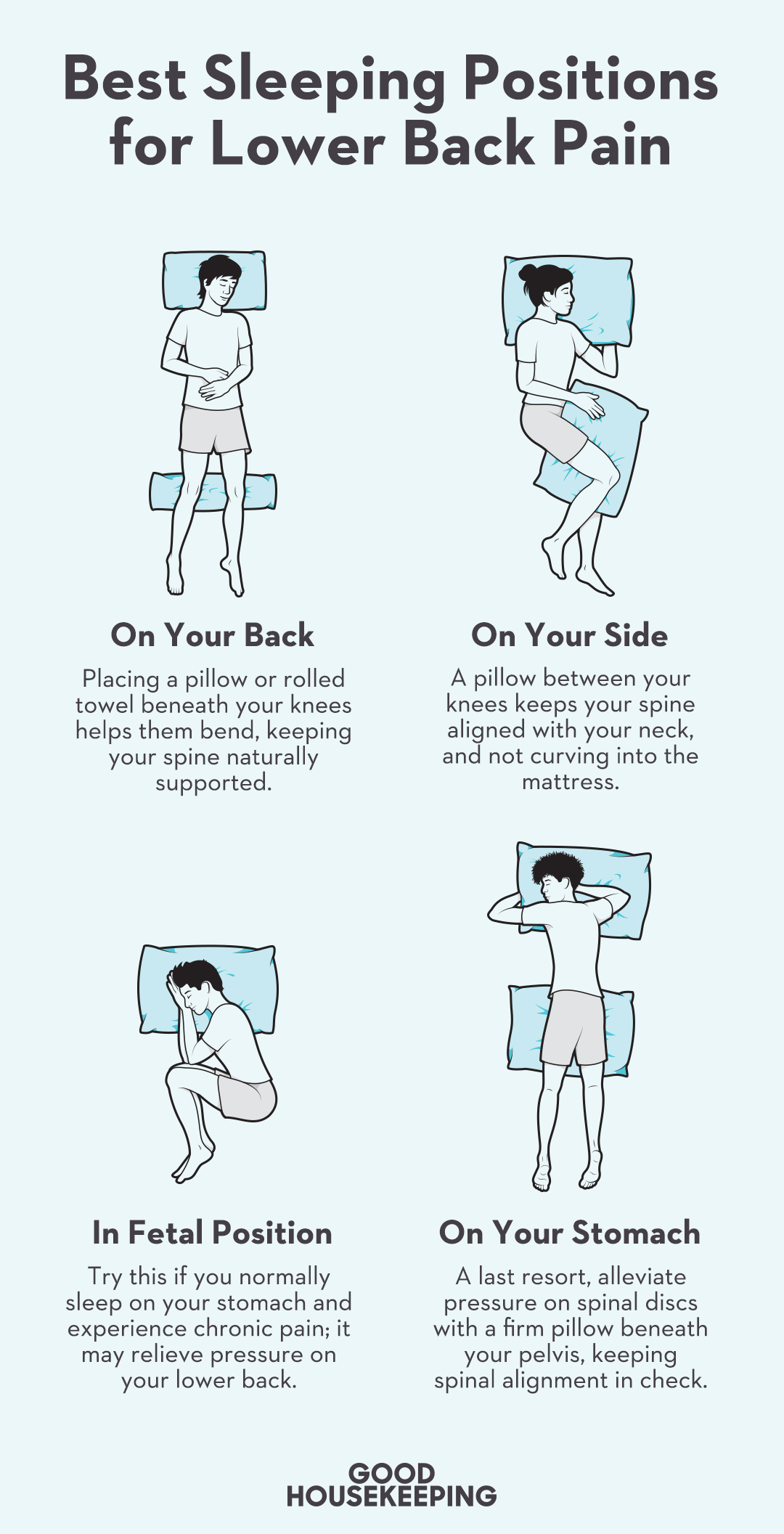
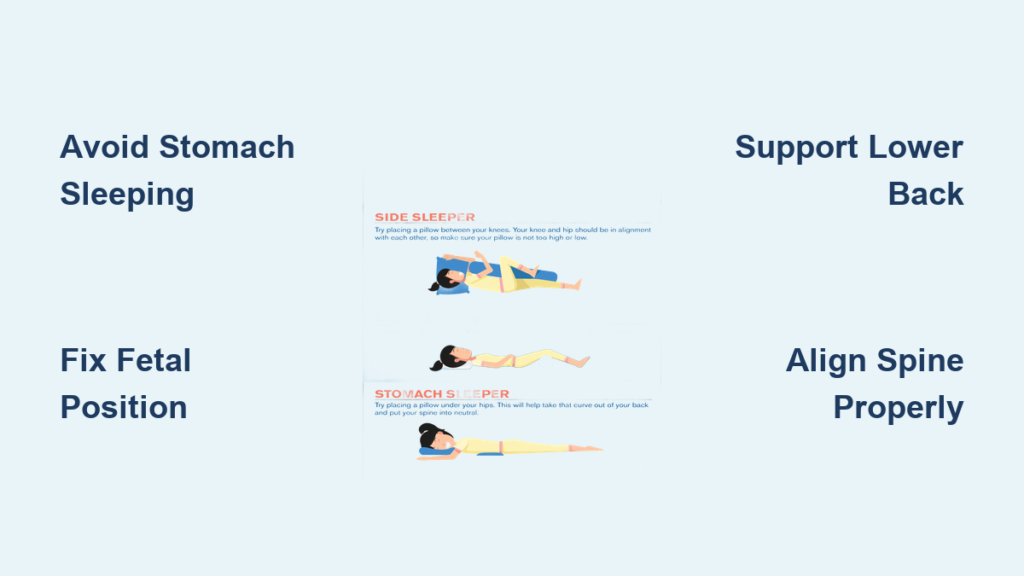
Sleeping face-down ranks as the worst sleeping position for lower back pain because it forces your spine into unnatural alignment for hours. When you lie on your stomach, your pelvis sinks into the mattress while your lower back arches excessively upward, creating what spinal specialists call “unsupported lordosis.”
Why Your Spine Suffers When Sleeping Face-Down
This position flattens your spine’s natural curve, placing tremendous pressure on your lumbar discs and facet joints. To breathe comfortably, you must turn your head 90 degrees to one side, creating dangerous torsion through your entire spine. This twisted position strains neck muscles while simultaneously forcing your lower back into hyperextension. The combination creates a domino effect of misalignment that often manifests as morning stiffness and pain.
Recognizing Stomach Sleeping Damage
If you regularly sleep on your stomach, watch for these specific warning signs:
* Persistent lower back pain that improves after 20-30 minutes of movement
* Sharp discomfort when transitioning from lying to sitting position
* Pain that radiates down one or both legs upon waking
* Increased pain intensity after sleeping longer than usual
Fetal Position Problems: When Side Sleeping Goes Wrong
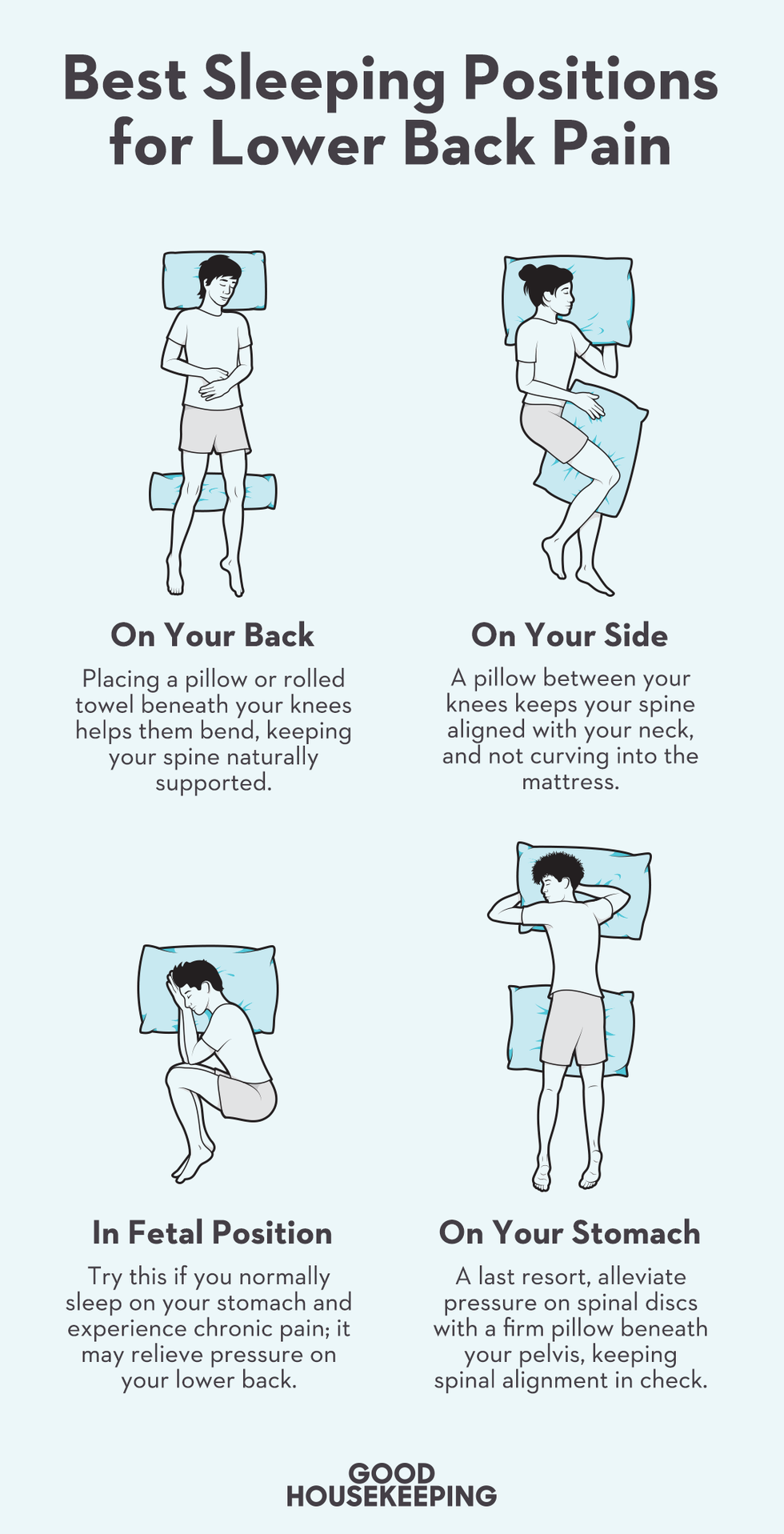
While side sleeping is generally recommended for back pain sufferers, curling too tightly into the fetal position creates its own set of problems. This extreme spinal flexion rounds your entire back into a C-shape, contradicting the spine’s natural S-curve and putting uneven pressure on discs.
The Hidden Dangers of Extreme Fetal Positioning
When your knees are pulled significantly higher than your hips and your chin tucks toward your chest, you’re creating excessive flexion that stretches posterior spinal ligaments while compressing the front portions of your discs. This uneven pressure distribution can exacerbate existing disc issues and lead to morning pain. Many people who believe they’re sleeping in a “safe” side position are actually straining their lower back through excessive fetal curling.
How to Modify Your Side Sleeping Position
If you prefer sleeping on your side, follow these adjustments to protect your lower back:
* Keep your knees slightly bent but positioned below hip level
* Place a supportive pillow between your knees to maintain hip alignment
* Choose a pillow height that keeps your neck in line with your spine
* Avoid tucking your chin toward your chest—imagine a straight line from ear to shoulder to hip
Back Sleeping Mistakes That Trigger Lower Back Pain

Sleeping flat on your back seems neutral but can worsen lower back pain without proper support. The natural curve in your lower back creates a gap between your lumbar spine and the mattress, leaving this critical area unsupported throughout the night.
The Unsupported Lumbar Gap Problem
When your lower back lacks support in the supine position, your back muscles must continuously contract to maintain alignment. This constant muscular effort leads to fatigue and pain by morning. Many back sleepers unknowingly exacerbate this problem by using pillows that are too thick, which tilts the head forward and creates additional spinal misalignment.
Effective Back Sleeping Modifications
Transform back sleeping from problematic to pain-relieving with these simple adjustments:
* Place a pillow or rolled towel under your knees to maintain natural spinal curvature
* Use a small lumbar roll (or rolled towel) to fill the gap between your lower back and the mattress
* Choose a pillow that supports your neck’s natural curve without elevating your head excessively
* Ensure your shoulders and hips remain flat against the mattress, not rolled to one side
Dangerous Twisted Positions That Damage Your Spine
Any sleeping position that involves spinal rotation creates dangerous torsion forces on your lumbar discs. These positions often develop unconsciously as you seek comfort but cause significant damage over time.
Common Twisting Positions to Avoid
- Half-stomach sleeping: When one leg remains straight while the other bends upward
- Reclined reading position: Upper body propped up while lower body remains flat
- Asymmetrical side sleeping: Shoulders and hips not stacked, creating spinal twist
How to Detect and Correct Twisted Sleeping
Check your position when you wake up—if your top leg has rotated significantly forward or backward from your bottom leg, you’re twisting your spine. Prevent this by placing a body pillow along your front when side sleeping or using a small pillow between your knees to maintain alignment. For back sleepers, ensure both shoulders and hips remain flat against the mattress.
Mattress and Pillow Combinations That Exacerbate Pain
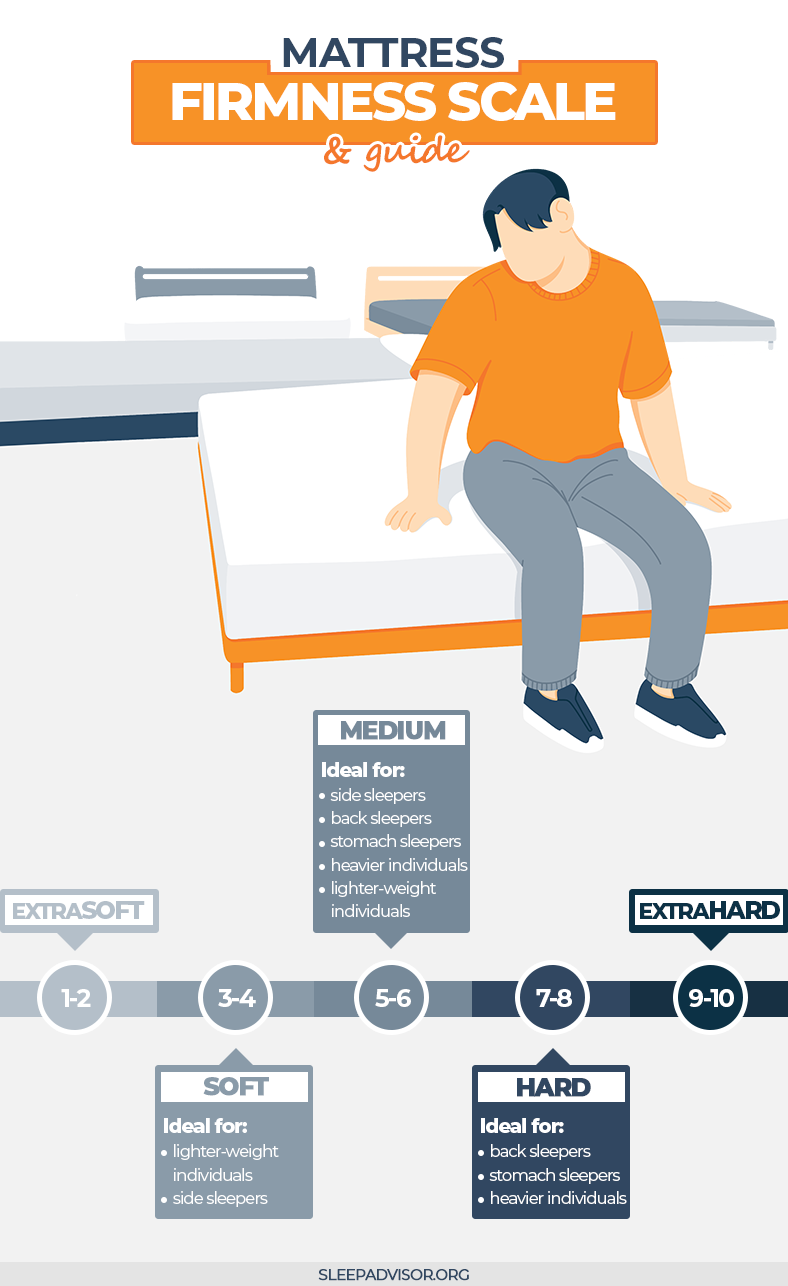
Your sleep surface plays a crucial role in how your sleeping position affects your back. The wrong mattress can turn an acceptable position into a pain trigger, while proper support can make problematic positions more tolerable.
Matching Mattress Firmness to Your Sleeping Position
- Stomach sleepers (though this position should be avoided): Medium-firm to firm
- Side sleepers: Medium to medium-soft to accommodate shoulder and hip contours
- Back sleepers: Medium-firm with adequate lumbar support
- Combination sleepers: Medium with responsive support that adapts to position changes
Strategic Pillow Placement Solutions
- For side sleepers: Place a pillow between knees to maintain hip alignment
- For back sleepers: Use a small pillow under knees to reduce lumbar pressure
- For stomach sleepers transitioning to other positions: Create physical barriers with pillows
- For all positions: Choose pillows that maintain neutral spinal alignment
Immediate Relief Strategies for Morning Back Pain
When you wake with lower back pain from poor sleeping positions, specific actions in the first 15 minutes can significantly reduce discomfort and prevent all-day pain.
The First 15 Minutes Protocol
Avoid sudden movements that strain your back. Instead:
1. Roll to your side before sitting up to minimize spinal stress
2. Use your arms to push yourself up, keeping your back straight
3. Walk gently for 2-3 minutes to restore circulation
4. Apply gentle heat to tight muscles using a warm shower or heating pad
Gentle Morning Stretch Sequence
Perform these movements while still warm from bed:
* Knee-to-chest pulls: Hold each leg for 30 seconds to relieve pressure
* Gentle cat-cow stretches: 10 slow repetitions to restore spinal mobility
* Standing back extensions: Place hands on lower back and gently arch backward
Long-Term Position Transition Strategies
Breaking long-standing sleep habits requires patience and strategic approaches. Most people revert to familiar positions during deep sleep, so creating physical reminders can help retrain your body.
The Pillow Fortress Method
Create physical boundaries using pillows to prevent unwanted movements. Side sleepers transitioning from stomach sleeping can place pillows along their front. Back sleepers can use small pillows under each arm to maintain position. These barriers gently guide you back to your target position when you start to roll.
Progressive Position Training
Change doesn’t happen overnight. Start by falling asleep in your new position, knowing you’ll likely move during the night. Each week, focus on extending the time you maintain the new position. Track your progress with a simple pain scale to stay motivated through the transition period.
When to Seek Professional Help
While adjusting your sleep position often provides significant relief, some back pain requires professional evaluation. Don’t ignore these red flags:
- Numbness or tingling in your legs that persists beyond morning
- Severe pain that prevents basic movement upon waking
- Pain lasting more than 2 hours after morning activity begins
- Progressive worsening of symptoms over several weeks
Physical therapists specializing in spinal health can provide personalized sleep position recommendations and therapeutic exercises to address underlying issues.
Transforming your sleep position represents one of the most effective self-care strategies for lower back pain. While breaking the stomach sleeping habit might be challenging, even reducing time in this position yields significant benefits. Start tonight with one simple adjustment—whether adding knee support for back sleeping or transitioning from stomach to side. Your spine will thank you tomorrow morning, and consistently implementing these changes will lead to lasting relief from position-related back pain. Remember that proper sleep posture works in harmony with your spine’s natural design, allowing your back muscles to fully relax and recover through the night.