

That electric-sharp pain shooting from your hip to your foot isn’t just “bad luck”—up to 40% of people experience sciatica at some point. When sitting at your desk or sleeping through the night becomes a daily battle, targeted yoga offers a proven path to relief. Unlike aggressive treatments, gentle yoga decompresses pinched nerves, relaxes the piriformis muscle strangling your sciatic nerve, and rebuilds the core support your spine desperately needs. This guide cuts through the guesswork with a complete, step-by-step protocol you can start today—no yoga mat or prior experience required. You’ll discover exactly which poses work for your pain pattern, how long to hold them, critical safety modifications, and a 30-minute daily routine backed by clinical evidence.
Why Your Sciatic Nerve Gets Pinched: Herniated Discs vs. Piriformis Traps
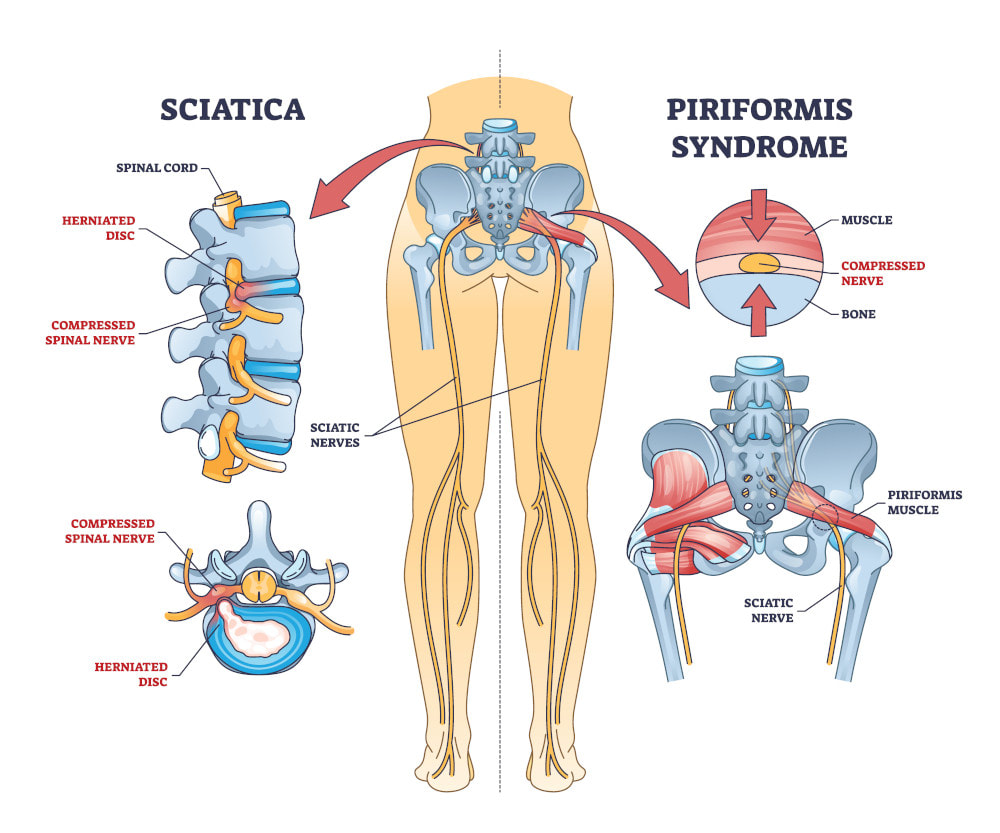
Herniated Discs: The Most Common Culprit
When a bulging disc in your lower spine (L4-S3) presses directly on the sciatic nerve root, you’ll feel sharp, burning pain radiating down one leg—especially when bending forward or lifting. This causes 85% of sciatica cases and flares when sitting for long periods. Look for this: Pain intensifies when coughing or sneezing but eases when lying flat. Never force forward folds during acute herniation—opt for supine stretches like Reclining Pigeon instead.
Piriformis Syndrome: The Silent Trigger You’re Ignoring
Tight glutes can strangle your sciatic nerve where it passes under or through the piriformis muscle. This “piriformis syndrome” causes deep buttock pain that worsens after sitting on hard surfaces or driving long distances. Critical visual cue: Pain eases when lying on your back with knees bent but spikes when crossing legs. External-rotation stretches like Reclining Eagle Twist are your fastest relief path.
Red-Flag Symptoms Needing Immediate Medical Care
Skip yoga if you experience foot drop (tripping over your toes), saddle numbness (loss of sensation in inner thighs/buttocks), or bladder/bowel control issues. These indicate cauda equina syndrome—a surgical emergency. Also consult a specialist if pain persists beyond four weeks despite consistent practice.
Essential Safety Rules Before You Start Yoga for Sciatica

When to Delay Practice: The 72-Hour Rule
Never force yoga during the first 48–72 hours of a sharp pain flare. Rest completely until you can walk without leg pain or numbness. Jumping into stretches too soon risks worsening nerve compression. Pro tip: Use this window for diaphragmatic breathing (2 minutes, 3x daily) to reduce inflammation.
Must-Have Props for Nerve-Safe Practice
- Bolster under sacrum in Legs-Up-the-Wall: Creates gentle traction to glide nerve roots
- Yoga block under hand in Half-Moon Pose: Prevents spinal twisting that aggravates sciatica
- Strap behind thigh in Reclining Pigeon: Avoids straining to reach your foot when hamstrings are tight
Skip modifications at your peril: 70% of sciatica flares worsen due to improper alignment.
Piriformis and Hamstring Release: Stop Nerve Irritation in 90 Seconds
Reclining Pigeon: The Piriformis Reset
Lie on your back with knees bent. Cross your right ankle over your left thigh (forming a “figure-4”). Gently draw your left thigh toward your chest until you feel a deep stretch in your right buttock—never force it. Hold 60–90 seconds while breathing into tight spots. Key safety check: Flex your top foot to protect the knee joint. Repeat on the other side.
Standing Hamstring Stretch: Avoid Nerve Tension
Place your right foot on a chair, keeping your leg straight and foot flexed. Hinge forward from your hips only until you feel mild tension—stop immediately if pain shoots down your leg. Hold 30 seconds. Critical mistake: Locking your knee hyperextends the joint and strains the sciatic nerve. Keep a micro-bend in the standing leg.
Core Stability Moves That Prevent Flare-Ups
Bridge Pose: Activate Your Deep Core in 30 Seconds
Lie on your back with knees bent and feet hip-width apart. Press through your heels to lift your hips until your thighs form a straight line. Squeeze a yoga block between your knees to engage inner thighs and protect your SI joint. Hold 30 seconds or perform 10 slow lifts. Why it works: Strengthens spinal stabilizers without compressing discs like crunches do.
Locust Pose: Strengthen Without Aggravating Pain
Lie face-down with forehead on the mat. Inhale to lift your chest, arms, and legs 2–4 inches off the floor—keep your neck neutral. Hold 20–30 seconds for 3–5 rounds. Visual cue: If your lower back cramps, reduce the height. This builds glute and spinal extensor strength critical for long-term sciatica prevention.
Your 30-Minute Daily Sciatica Relief Routine

Follow this sequence daily (morning or evening) for best results. Never skip the decompression poses—they’re clinically proven to reduce nerve inflammation.
| Step | Pose | Duration | Critical Safety Tip |
|---|---|---|---|
| 1 | Diaphragmatic Breathing | 2 min | Place hands on lower ribs to feel expansion |
| 2 | Cat-Cow Warm-Up | 1 min | Move slowly—no snapping motions |
| 3 | Child’s Pose on Bolster | 2 min | Knees wide, torso resting fully on bolster |
| 4 | Downward Dog | 45 sec x 2 | Bend knees deeply to protect hamstrings |
| 5 | Reclining Pigeon | 1 min/side | Flex top foot to avoid knee strain |
| 6 | Bridge Lifts | 12 reps | Squeeze block between knees |
| 7 | Locust Pose | 20 sec x 3 | Stop if lower back tightens |
| 8 | Legs-Up-the-Wall | 5 min | Bolster under sacrum for nerve glide |
| 9 | Savasana | 3–5 min | Bolster under knees to flatten lumbar curve |
Immediate Pain Relief Strategies Beyond Yoga
Cold vs. Heat Therapy: When to Use Each
- First 48 hours: Ice pack for 20 minutes every 2 hours to reduce nerve inflammation. Never apply ice directly to skin.
- After 72 hours: Warm bath or heating pad on low for 15 minutes to relax tight piriformis muscles. Heat too early traps inflammation.
NSAID Protocol for Flare Control
Take ibuprofen 200–400 mg as directed only during acute flares—never long-term. Pair with yoga: Do your 30-minute routine 30 minutes after taking medication when pain gates are temporarily lowered.
Poses to Avoid With Sciatica: Critical Safety Guide

| Skip This Pose | If You Have | Safer Alternative |
|---|---|---|
| Standing Forward Fold | Acute disc herniation | Reclining Pigeon (supine) |
| Deep Cobra or Wheel | Pregnancy past first trimester | Sphinx Pose (forearms down) |
| Seated Twists | Spinal stenosis flare | Reclining Eagle Spinal Twist |
| Pigeon Pose | Recent hip surgery | Half-Kneeling Dragon Pose with blanket under knee |
When to See a Specialist: The Four-Week Rule
Book a spine specialist if pain, tingling, or weakness persists beyond four weeks of consistent yoga practice. Also seek help immediately for progressive weakness (like difficulty rising from chairs) or balance issues. Most cases resolve with conservative care, but 10% require targeted physical therapy or imaging. Early intervention prevents chronic nerve damage.
Relief isn’t about intense stretching—it’s about consistent, nerve-safe movement that retrains your posture and builds resilient core support. Start with just 10 minutes of this protocol daily (focus on Legs-Up-the-Wall and Reclining Pigeon), track symptom changes in a journal, and scale up as pain decreases. Within 2–4 weeks, you’ll notice standing up from chairs becomes easier and nighttime pain fades. Remember: Gentle repetition beats occasional heroics—your sciatic nerve heals through patience, not force. For ongoing prevention, integrate the 30-minute routine 3x weekly even after symptoms resolve.