

Eighty percent of Americans experience lower back pain, often triggered by prolonged sitting, weak core muscles, and tight hip flexors. While popping painkillers seems instinctive, clinical research reveals yoga movements for lower back pain deliver results comparable to physical therapy—with the added benefit of teaching your body to heal itself. A pivotal 2017 study found both approaches produced similar reductions in pain and activity limitations, with participants significantly less likely to use pain medication after three months.
Remaining sedentary only worsens stiffness and muscular imbalances. Instead, specific yoga sequences target the root causes: weak glutes forcing your lower back to overcompensate, tight psoas muscles pulling on your lumbar spine, and stress-induced nervous system tension. These evidence-based movements provide immediate relief while building long-term resilience. You’ll learn precisely which poses address your pain triggers, how to modify them for safety, and why consistency matters more than intensity.
Weak Glutes and Tight Hips: Why Your Lower Back Bears the Burden
Prolonged sitting creates a dangerous cycle: inactive glutes force your lower back muscles to handle everyday movements they weren’t designed for. Simultaneously, tight hip flexors (especially the psoas) physically tug on your lumbar vertebrae, compressing discs and triggering pain. Dr. Robert Saper from Cleveland Clinic confirms these muscular imbalances are primary culprits behind non-structural back pain.
Yoga movements for lower back pain break this cycle by simultaneously stretching overactive muscles and strengthening underused ones. Unlike generic stretching, therapeutic poses like Bridge and Pigeon specifically target the hip-spine connection. Expect subtle shifts—you might feel tension release in your hips before noticing back relief. This isn’t instant magic; it’s retraining your body’s movement patterns. Always stop if you feel sharp pain, which indicates you’re aggravating structural issues like herniated discs.
Cat-Cow: Instant Spinal Mobility for Morning Stiffness
Begin on hands and knees with wrists under shoulders. Inhale deeply as you drop your belly, lift your tailbone, and gaze forward (Cow). Exhale completely while rounding your spine, tucking your chin and pelvis (Cat). Flow continuously for 90 seconds, syncing each movement with your breath. This rhythmic motion lubricates spinal joints and eases stiffness within minutes.
Pro tip: If new to yoga, move slower for the first minute. As your spine warms, gradually increase speed to build momentum. Watch for smooth transitions between vertebrae—jerky movements defeat the purpose.
Child’s Pose: Gentle Traction for Acute Pain Flares
Kneel with big toes touching and knees wide. Sit back on your heels while folding forward, resting your torso between your thighs. Extend arms overhead or rest them alongside your body. Hold for 3-5 minutes, breathing deeply into your lower back. This pose creates gentle traction along your spine, decompressing discs aggravated by sitting.
Modification: Place a folded blanket under your hips if knees feel strained, or tuck a bolster under your torso for full support during intense pain episodes. The goal is total relaxation—never force depth.
Bridge Pose: Strengthen Weak Glutes to Neutralize Back Strain
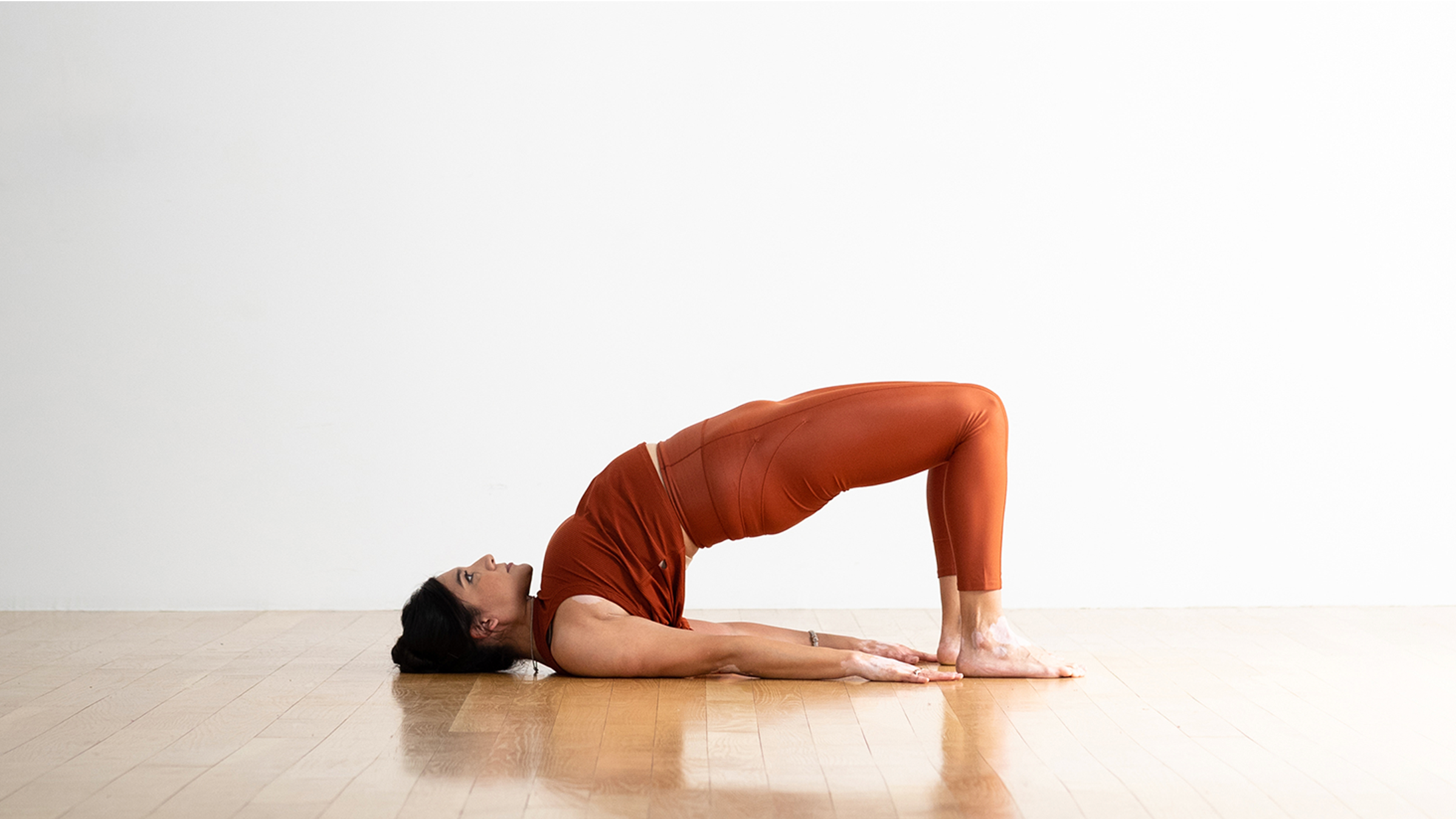
Lie on your back with knees bent and feet hip-width apart. Press through your heels to lift your hips, engaging your glutes—not your lower back. Interlace fingers under your spine for added stability. Hold for 5 breaths, then lower slowly vertebra by vertebra. This pose directly counters sitting-induced gluteal weakness that forces your lumbar spine to overwork.
Critical safety note: If you feel pinching in your lower back, your hips are lifting too high. Keep movements subtle—your hips should only rise to the height where you maintain pelvic neutrality. For disc issues, use a yoga block under your sacrum for a supported version that still activates glutes without spinal load.
Reclining Spinal Twist: Reset Hip Alignment Without Strain
Lie on your back with arms extended in a T. Bring knees to chest, then drop them to the right while keeping both shoulders grounded. Gaze left to deepen the twist. Hold for 90 seconds per side. This pose realigns pelvic rotation caused by uneven sitting habits, releasing tension where your hip meets your spine.
Warning: Skip this if twisting triggers sharp pain—it may indicate disc involvement. Use a block between your knees for stability if your hips don’t reach the floor comfortably.
Pigeon Pose: Release Hip Rotators Causing Referred Back Pain
From Downward Dog, step your right foot forward between your hands. Slide your right shin toward the front of your mat (angling knee toward wrist), extending your left leg back. Square your hips toward the front and fold forward over your right leg. Hold for 90 seconds per side, breathing into tightness in your right hip.
Why this works: Tight external hip rotators (like piriformis) refer pain to your lower back. Pigeon directly stretches these muscles. If your hip hovers, place a folded blanket under it—never force the shape. For disc sensitivity, try the supine version: Lie on your back, cross right ankle over left thigh, and pull left thigh toward chest.
Legs-Up-the-Wall: Calm Nervous System Pain Amplification
Sit sideways against a wall, then swing your legs up as you lie back. Adjust distance so legs rest comfortably (knees slightly bent if hamstrings are tight). Rest here for 4 minutes. This gentle inversion reduces sympathetic nervous system activity that amplifies pain perception.
Key insight: Stress makes back pain feel worse by heightening nerve sensitivity. This pose triggers parasympathetic “rest-and-digest” mode, lowering perceived pain intensity within minutes. Place a bolster under your hips for deeper relaxation.
When to Skip Forward Folds: Critical Safety Modifications

Standing Forward Bend (Uttanasana) can worsen disc-related pain if performed incorrectly. Never hinge from your waist—always bend knees generously and hinge from hips. If you feel nerve pain shooting down your legs, skip it entirely and choose Child’s Pose instead.
Disc-safe alternative: Practice Supported Bridge Pose with a block under your sacrum. Lie on your back, lift hips just enough to slide a block (medium height) under your sacrum. Rest here for 3 minutes while breathing into your hip flexors. This passively lengthens tight muscles without spinal compression.
10-Minute Desk Worker Rescue Routine
- Child’s Pose (2 min): Reset spinal alignment after sitting
- Cat-Cow (2 min): Mobilize stiff vertebrae
- Supine Figure-Four (1 min/side): Release glute tension
- Supported Bridge (2 min): Activate dormant glutes
- Legs-Up-the-Wall (3 min): Reset nervous system
Perform this sequence hourly during workdays. It specifically counters the hip flexor tightness and gluteal inhibition caused by chair-sitting. Track pain levels before and after—you’ll notice cumulative effects within two weeks.
Track Your Pain: Measure What Actually Works
Rate your back pain from 1-10 before and after each session. Note which poses provide relief versus discomfort. Research shows consistency trumps duration—three 10-minute sessions weekly yield better results than one 60-minute session. If pain increases after Pigeon Pose, substitute Seated Figure-Four: Sit in a chair, cross right ankle over left knee, and lean forward slightly.
Pro tip: Pair yoga with walking—just 10 minutes hourly disrupts sitting’s damaging effects. Combine these movements for lower back pain with stress management; deep breathing during Legs-Up-the-Wall lowers cortisol that exacerbates pain sensitivity.
Yoga movements for lower back pain work because they address the true sources of discomfort: weak stabilizers, tight connectors, and nervous system overload. Start with the 10-minute desk routine daily, modifying poses to eliminate strain. Within weeks, you’ll notice reduced stiffness and greater resilience against flare-ups. Remember Dr. Mercola’s insight: “Pain identifies something not good for long-term health.” Use these poses not just for relief, but to rebuild your body’s natural support system—where consistent micro-movements create macro-change. Your path to lasting comfort begins with one breath, one pose, one reprieve at a time.