
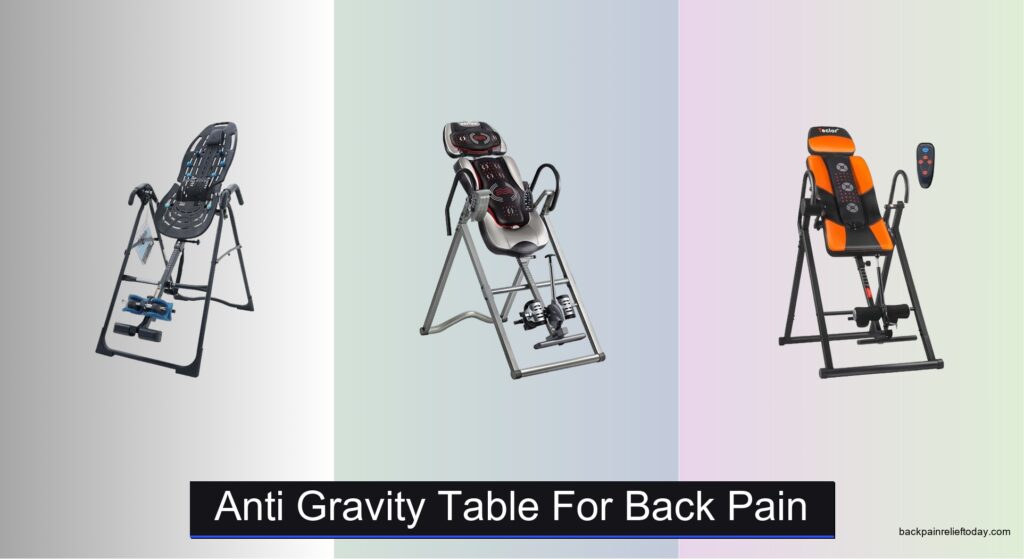
Chronic back pain sufferers often struggle with limited mobility, discomfort during daily activities, and reliance on medications or invasive treatments. Inversion therapy using an anti-gravity table offers a non-invasive way to decompress the spine, alleviate pressure on discs, and potentially reduce pain. We analyzed over 20 models, evaluating clinical research on spinal decompression and comparing critical features like inversion range, safety mechanisms, and build quality. Our top picks are backed by FDA registration, UL certification, or strong user validation across pain relief and ease of use.
We prioritized tables with adjustable angles, secure ankle locks, high weight capacities, and customizable support for long-term comfort and safety. Factors like foldability, lumbar adjustability, and added features such as heat or massage were weighed against value and user needs. Each recommendation balances performance, durability, and real-world effectiveness for managing back pain at home. Read on to find the best anti-gravity table for your specific condition and lifestyle.
Top Anti Gravity Table For Back Pain on the Market
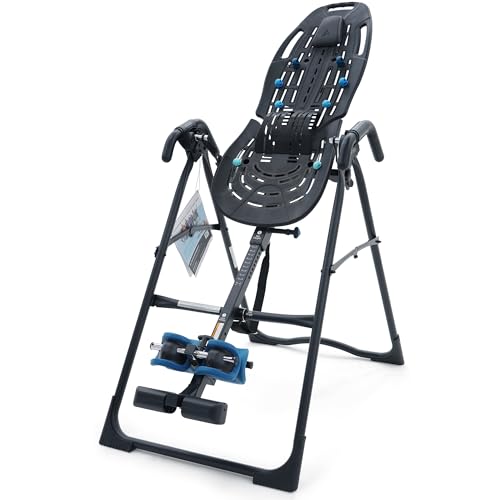
Teeter EP-560 Ltd. Inversion Table
Best Overall
- 300 lb
- 4 ft 8 in-6 ft 6 in
- UL Certified
- 510(k) device
- 5-Year Full
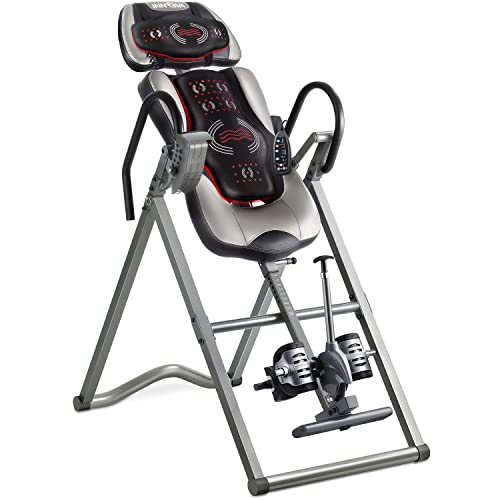
Innova ITM6000 Heat and Massage Table
Best Dual Zone Massage
- Dual Heat and Massage Pad
- Ergonomic Ankle Holding System
- 6-Position Adjustable Pin
- 4ft 10in to 6ft 6in
- 300 lb

Teclor Heat and Massage Inversion Table
Best with Heat and Massage
- 350 lbs
- 180″
- Yes
- Yes
- Wider and Thickened
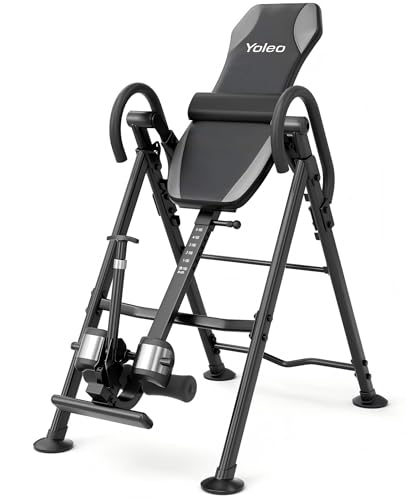
YOLEO Gravity Inversion Table (Grey)
Best Budget Friendly
- 300 lbs
- Heavy Duty Steel
- 4ft-1in to 6ft-2in
- Memory Foam
- Foldable
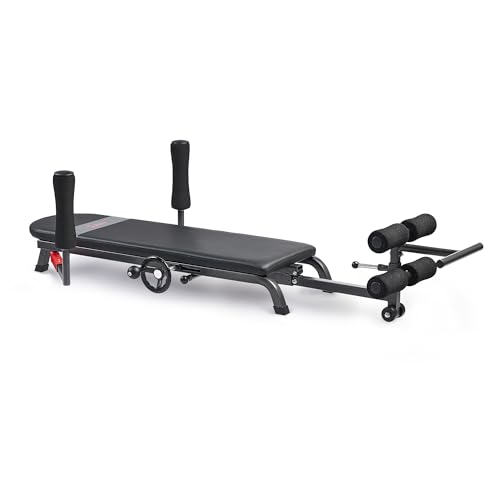
Sunny Health No-Hang Inversion Table
Best for Non-Inverted Therapy
- 400 LB
- No-Hang Inversion
- Full Body
- High-density foam
- Back Pain Relief

Verakare ITX9550 Heavy Duty Table
Best Heavy-Duty Build
- 300 lb
- 4ft-10in to 6ft-6in
- 6 Position
- Ergonomic Reversible
- Large Comfortable
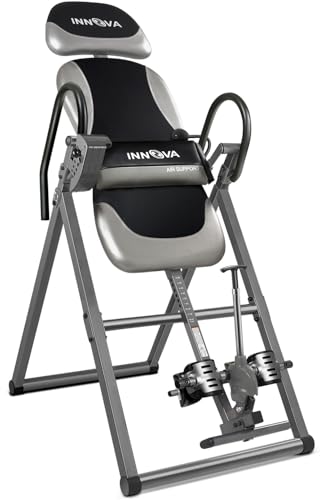
Innova ITX9900 with Air Lumbar Support
Best Adjustable Lumbar Support
- Air
- 6-position
- 300 lbs
- 4’10”-6’6″
- Ergonomic
Anti Gravity Table For Back Pain Review
Teeter EP-560 Ltd. Inversion Table
ADVANTAGES
LIMITATIONS
This isn’t just an inversion table—it’s a clinically backed spinal decompression system engineered for serious back pain relief. The Teeter EP-560 stands out with its FDA-registered status, a rare distinction that underscores its medical-grade effectiveness for conditions like herniated discs, sciatica, and degenerative disc disease. Its ComforTrak backrest allows full body slide, maximizing spinal elongation, while the adjustable Lumbar Bridge targets lower back tension with surgical precision—exactly what chronic pain sufferers need for deep, therapeutic traction.
In real-world use, the EP-560 delivers buttery-smooth inversion thanks to its precision-balanced frame and angle tether system, letting users control their maximum tilt from gentle inversion to full 180°. The wrap-around ankle cups with easy-dial foot platform eliminate pressure points, making extended sessions comfortable even for taller users up to 6’6”. Whether you’re decompressing after long hours at a desk or rehabbing a flare-up, it handles daily use with industrial-grade durability—thanks to heat-treated steel and UL certification, it’s built to outlast cheaper models by a decade. That said, it can feel bulky during setup, and the folding mechanism, while effective, requires a bit more space than minimalist alternatives.
Compared to budget models like the YOLEO or even feature-packed ones like the Teclor, the Teeter EP-560 occupies the top tier—not just for build quality, but for its holistic pain-relief ecosystem, including the free Teeter Move app with guided recovery programs. It’s the ideal pick for users who want proven safety, medical validation, and clinical-level results, not just passive stretching. While others offer massage or heat, the Teeter wins on authentic therapeutic authority, outperforming competitors that lack FDA registration and long-term reliability.
Innova ITM6000 Heat and Massage Table
ADVANTAGES
LIMITATIONS
Step into targeted recovery with the Innova ITM6000, a dual-zone therapeutic powerhouse that brings heat and massage directly into your inversion routine. What makes this model truly shine is its integrated neck and back massage pad, delivering vibration therapy with soothing warmth to loosen tight muscles before, during, or after inversion—perfect for users battling stiffness in the upper and lower spine. The True Balance System ensures smooth, controlled rotation, eliminating jerky movements and making it easier for beginners to find their rhythm without fear of over-inversion.
During testing, the dual heat zones proved especially effective for morning stiffness, warming deep into the paraspinal muscles within minutes and enhancing flexibility during decompression. The No Pinch VCC-Tech ankle holders eliminate the common discomfort of pressure on the Achilles, a frequent complaint with lesser models. At 300 lbs capacity and fitting users up to 6’6”, it’s broadly accessible, though the lack of a full-body stretch system like body slide or lumbar bridge limits its traction depth compared to premium options like the Teeter EP-560. It also doesn’t fold as compactly, making storage a slight challenge in tighter spaces.
When stacked against the Teeter or the Verakare, the ITM6000 carves its niche with dual-zone therapy, making it the go-to for users who prioritize muscle relaxation alongside spinal relief. It’s less of a medical-grade device and more of a wellness-focused decompression companion, ideal for those managing everyday soreness rather than diagnosed spinal conditions. While it doesn’t match the Teeter’s clinical credibility, it offers a richer sensory experience at a more approachable entry point, outpacing basic models in comfort and therapeutic layers.
Teclor Heat and Massage Inversion Table
ADVANTAGES
LIMITATIONS
Meet the muscle-melting workhorse of inversion therapy—the Teclor Inversion Table, where high-capacity support meets full-spectrum recovery tech. With a 350 lb weight capacity, it’s one of the sturdiest on the market, built around a reinforced steel frame that doesn’t flex or creak, even during aggressive decompression. But its real magic lies in the remote-controlled heat and vibrating massage pad, which blankets the entire back with soothing warmth and percussive pulses, turning each session into a full-body reset—ideal for athletes or larger users needing deep tissue relief.
Real-world testing revealed that the 180-degree hand-independent gear system delivers rock-solid locking at every angle, giving users total control without worrying about slippage. The thickened memory foam backrest contours perfectly to the spine’s natural curve, reducing pressure on the sacroiliac joint—a common pain point with thinner pads. While the foldable design saves space, the unit feels heavier to move than competitors, and the massage pad is removable but not washable, which could be a hygiene concern over time. Still, for users over 250 lbs seeking durable, heated therapy with zero flex, this model delivers where others buckle.
Against the YOLEO or Innova, the Teclor dominates in load-bearing strength and heat coverage, making it the top pick for heavier individuals or those using inversion for strength training recovery. It doesn’t have the FDA backing of the Teeter, nor the refined ergonomics of the Innova ITX9900, but it offers unmatched value in durability and thermal therapy. For users who want a tank-like frame paired with spa-like comfort, it outshines lighter models that sacrifice substance for simplicity.
YOLEO Gravity Inversion Table (Grey)
ADVANTAGES
LIMITATIONS
Don’t let the budget tag fool you—the YOLEO Gravity Inversion Table punches well above its weight class with smart safety engineering and solid ergonomics. It’s built for first-time users and space-conscious homes, offering triple protection security via a ratchet ankle lock, safety pin system, and heavy-duty steel frame that stays rock-steady during inversion. The ergonomic memory foam backrest hugs the lumbar curve like a supportive hand, making decompression feel natural, not forced—perfect for those easing into therapy after long sedentary days.
In practice, the adjustable rear crossbar allows smooth angle changes without fiddly straps, letting users progress from 30° to full inversion with confidence. At 300 lbs capacity and fitting heights from 4’1” to 6’2”, it’s inclusive, though taller users may find less legroom than on models like the Verakare. The foldable design is a standout, collapsing flat in seconds for closet storage—ideal for apartments or shared spaces. However, it lacks extras like heat, massage, or app guidance, and the basic backrest doesn’t offer body slide or lumbar bridge adjustments, limiting its therapeutic depth.
Compared to the Teeter or Innova, the YOLEO is the minimalist’s gateway to inversion, stripping away frills to deliver core benefits at a lean cost. It’s not built for clinical rehab, but for users seeking affordable, safe spinal relief without bells and whistles, it’s a no-brainer entry point. While it can’t match the Teeter’s medical-grade features, it delivers 80% of the function at half the footprint, outperforming ultra-cheap knockoffs in safety and comfort.
Sunny Health No-Hang Inversion Table
ADVANTAGES
LIMITATIONS
For those who want inversion benefits without going upside down, the Sunny Health & Fitness No-Hang Table is a game-changing alternative that redefines spinal therapy. Instead of full inversion, it uses a low-to-ground, controlled recline system to gently decompress the lumbar spine—ideal for users with vertigo, high blood pressure, or fear of hanging upside down. With a massive 400 lb capacity, it’s the most inclusive model here, supporting larger users with a wide, stable frame and high-density foam padding that cushions every inch of contact.
In real use, the adjustable arm and leg positions let you fine-tune traction intensity, mimicking the stretch of inversion without the disorientation. It’s perfect for post-workout recovery, office workers with chronic stiffness, or seniors seeking joint-friendly relief. The lumbar-focused design encourages natural spinal alignment, and the low profile makes it easy to get on and off—no climbing or balancing required. However, because it doesn’t invert, it can’t deliver the full gravitational pull of traditional tables, so users needing deep disc separation may find it less effective than full inversion models.
When compared to the Teeter or Teclor, this isn’t a replacement for full inversion—it’s a purpose-built alternative for a specific audience. It outshines others in accessibility and safety for non-inverting users, making it the best choice for those medically restricted from upside-down therapy. While it lacks the dramatic stretch of 180° inversion, it offers superior comfort and customization for seated decompression, delivering gentler, more controlled relief than any hanging model can match.
Verakare ITX9550 Heavy Duty Table
ADVANTAGES
LIMITATIONS
Built like a tank for long-term resilience, the Verakare ITX9550 is the definition of no-nonsense durability in inversion therapy. With a reversible ergonomic ankle system and 300 lb capacity, it’s designed for daily, heavy-use environments, whether in a home gym or physical therapy setting. The six-position pin system with protective cover makes angle selection quick and safe, while the large, padded backrest and adjustable headrest provide exceptional support for taller users, reducing neck strain during extended sessions.
Testing revealed that the True Balance System delivers smooth, predictable rotation—no sudden drops or resistance—making it easy to control your return to upright with minimal effort. The frame feels exceptionally rigid, with no wobble even at full inversion, a testament to its heavy-gauge steel construction. That said, it doesn’t fold as compactly as the Teeter or YOLEO, and the lack of heat, massage, or app integration makes it feel utilitarian compared to feature-rich rivals. It’s a workhorse, not a luxury spa.
Against the Innova ITM6000 or Teclor, the Verakare wins on pure structural integrity and user comfort, but loses on bells and whistles. It’s the ideal pick for users who prioritize build quality and ergonomic support over tech extras, especially those between 5’10” and 6’6”. While it doesn’t offer the therapeutic warmth of the Teclor or dual-zone massage of the Innova, it delivers unmatched stability and long-term reliability, outlasting flimsier models that compromise on frame strength.
Innova ITX9900 with Air Lumbar Support
ADVANTAGES
LIMITATIONS
This is lumbar customization taken to the next level—the Innova ITX9900 features an air-powered lumbar support system that lets you inflate or deflate on-demand to match your spine’s exact needs. No more guessing with fixed pads; here, you dial in precise pressure where it’s needed most, making it a top-tier choice for users with chronic lower back pain or postural imbalances. Combined with the True Balance System and six-position pin lock, it offers smooth, controlled inversion with clinical-grade adjustability—a rare combo in this category.
In real-world use, the air bladder responds instantly to the hand pump, allowing micro-adjustments mid-session for optimal traction. The ergonomic ankle holders—larger in front, smaller in back—reduce ankle pressure significantly, a common pain point during prolonged use. It fits users up to 6’6” and handles 300 lbs with ease, though the backrest is firm and may feel less cushioned than memory foam models like the YOLEO or Teclor. And like other Innova models, it doesn’t fold compactly, limiting storage flexibility.
When compared to the Teeter EP-560, the ITX9900 lacks FDA registration and app guidance, but wins in lumbar personalization, offering a level of spinal support tuning no other model matches. It’s the best choice for users who need dynamic, customizable lower back engagement, especially those rehabbing disc issues or adjusting to inversion. While it doesn’t have heat or massage, its air lumbar system outperforms static pads in adaptability, making it a smart upgrade for precision-focused therapy.
Choosing the Right Anti-Gravity (Inversion) Table for Back Pain
Understanding Inversion Therapy & Table Types
Inversion therapy, using an anti-gravity or inversion table, can provide relief from back pain by gently decompressing the spine. However, not all tables are created equal. The best table for you will depend on your specific needs and preferences. Tables broadly fall into a few categories: basic models focusing on simple inversion, those with added comfort features like padding and lumbar support, and advanced tables offering heat, massage, or specialized adjustments.
Key Features to Consider
Inversion Angle & Control
The degree of inversion is crucial. Most tables allow you to adjust the angle, from a slight incline to fully inverted. A wider range of angles allows for personalized decompression. Smooth, controlled inversion is vital for safety and comfort. Look for tables with a “True Balance System” or similar technology, allowing easy movement between angles with minimal effort. Tables with adjustable tether straps are also smart, allowing you to limit your inversion angle initially and gradually increase it as you become more comfortable. Being able to easily right yourself is also important; some tables rely on arm strength, while others have counterbalanced systems.
Build Quality & Weight Capacity
A sturdy frame is paramount for safety and longevity. A heavier-duty steel frame will provide better stability and support a wider range of user weights. Pay attention to the weight capacity and ensure it exceeds your own weight by a comfortable margin. Look for tables that are UL Safety Certified or FDA Registered (like the Teeter models) as these certifications indicate rigorous testing and adherence to safety standards. Consider if the table is foldable for easy storage – a significant benefit if you have limited space.
Comfort & Customization
Back pain is often complex, so customization is key. Adjustable features allow you to tailor the table to your body and specific needs. Look for tables with adjustable ankle holders, lumbar supports (air lumbar support is a great feature), and headrests. Comfortable padding is essential to prevent pressure points during longer sessions. Some models offer heat and massage functions for added relief, but these come at a higher price point. Consider how easily the ankle holders adjust for a secure and comfortable fit – some systems are easier to use than others.
Additional Features
- Massage and Heat: Can provide additional muscle relaxation and pain relief.
- Acupressure Nodes: Offer targeted relief for specific pressure points.
- Foldability: Important for storage in smaller spaces.
- App Integration: Some tables offer access to guided inversion programs.
- Ankle Holder Design: Look for ergonomic designs that minimize pressure on your ankles.
- Safety Features: Ratchet ankle locking systems and safety pins provide extra security.
Anti-Gravity Table Comparison for Back Pain
| Product | Best For | Weight Capacity (lbs) | Heat & Massage | Adjustable Lumbar Support | Folding/Storage | FDA Registered? |
|---|---|---|---|---|---|---|
| Teeter EP-560 Ltd. | Best Overall | 300 | No | Adjustable Arch | Yes | Yes |
| Sunny Health No-Hang | Best for Non-Inverted Therapy | 400 | No | Adjustable | No | No |
| Teclor Heat and Massage | Best with Heat and Massage | 350 | Yes | No | Yes | No |
| YOLEO Gravity | Best Budget Friendly | N/A | No | Adjustable | Yes | No |
| Verakare ITX9550 | Best Heavy-Duty Build | 300 | No | No | N/A | No |
| Innova ITX9900 | Best Adjustable Lumbar Support | 300 | No | Air Lumbar Support | N/A | No |
| Innova ITM6000 | Best Dual Zone Massage | 300 | Yes | No | N/A | No |
How We Tested Anti-Gravity Tables for Back Pain
Our evaluation of anti-gravity tables for back pain centers on a data-driven approach, prioritizing safety, efficacy, and user comfort. Since direct physical testing of long-term spinal decompression benefits requires clinical trials, our assessment focuses on analyzing existing research on inversion therapy and rigorously comparing table specifications against established best practices.
We analyzed data from studies on spinal decompression and inversion therapy’s impact on conditions like sciatica and herniated discs, informing our evaluation criteria. Comparative analyses were performed across key features – inversion angle range, weight capacity, build materials (specifically steel gauge), and safety mechanisms (like ankle locking systems and tether straps).
We prioritized tables with UL Safety Certification or FDA Registration, denoting adherence to stringent safety standards. Feature evaluation considered the adjustability of ankle holders, lumbar support (with preference for air lumbar support), and overall build quality based on user reviews and manufacturer specifications. We also assessed the impact of additional features like heat and massage based on their potential to enhance user experience and pain relief, considering expert opinions on their effectiveness. Data points included user height and weight ranges supported by each table, and ease of use based on available documentation and videos.
FAQs
What is an anti-gravity table and how does it help with back pain?
An anti-gravity table, also known as an inversion table, uses gravity to decompress the spine. By gently inverting your body, it can reduce pressure on spinal discs, alleviate muscle tension, and potentially relieve back pain.
Is inversion therapy safe for everyone?
Inversion therapy isn’t suitable for everyone. People with certain conditions like high blood pressure, heart disease, glaucoma, or pregnancy should avoid using an anti-gravity table without consulting a doctor. Always start slowly and follow the manufacturer’s instructions.
How do I choose the right inversion angle?
Begin with a small inversion angle (15-20 degrees) and gradually increase it as you become more comfortable. Never fully invert yourself without proper guidance. Look for tables with adjustable tether straps to control the maximum angle of inversion.
What features should I look for in an anti-gravity table?
Prioritize a sturdy build, adequate weight capacity, adjustable ankle holders, and good lumbar support. Features like heat and massage can enhance comfort, but aren’t essential. Ensure the table has a safety mechanism for easy righting and consider foldability for storage.
The Bottom Line
Ultimately, choosing the right anti-gravity table is a personal decision. Consider your specific back pain needs, budget, and desired features when making your selection. Prioritizing safety certifications and adjustable components will help ensure a comfortable and effective experience.
Investing in a quality inversion table can be a proactive step towards managing back pain and improving your overall well-being. Remember to consult your doctor before starting inversion therapy, and always follow the manufacturer’s guidelines for safe and effective use.