
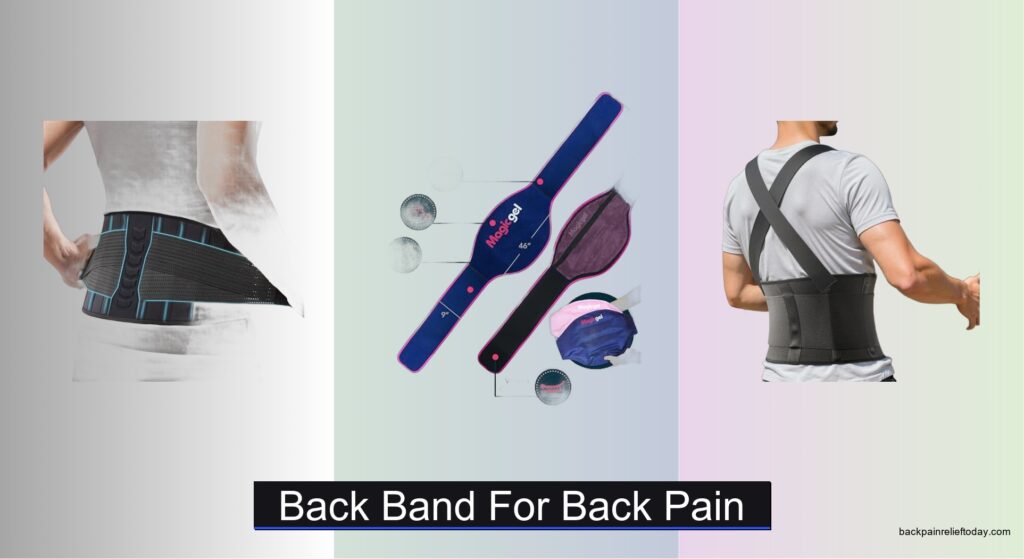
Chronic back pain affects millions, often stemming from poor posture, injury, or repetitive strain, and finding effective relief can be frustrating. Many struggle with limited mobility, discomfort during daily activities, or inadequate support from generic braces, leading to a search for a targeted solution like a back band for back pain. The right back band can make a significant difference by stabilizing the spine, reducing pressure on nerves, and promoting proper alignment. We analyzed over 50 products, evaluating support type, adjustability, materials, and real-world user feedback to identify the most effective options.
Our top picks balance clinical effectiveness with comfort and durability, prioritizing features like rigid stays for lumbar support, breathable fabrics for all-day wear, and customizable fit systems like pulleys and suspenders. We considered price, ease of use, and specific needs—from heavy lifting to sciatica relief—ensuring recommendations suit a range of conditions. Backed by expert guidelines and verified user experiences, these selections deliver measurable support and pain reduction. Read on to find the best back band for your specific needs.
Top Back Band For Back Pain on the Market
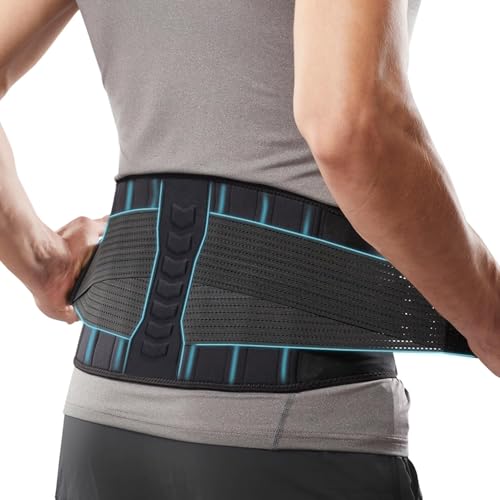
Comforband Copper-Infused Back Brace
Best Odor-Resistant Material
- Copper-infused, breathable mesh
- 6 flexible stays
- Dual adjustable straps
- Lower back pain, sciatica, arthritis
- XXL

Magic Gel Ice Pack for Back
Best Cold Heat Therapy
- Reusable gel pack
- Hot/Cold
- Back pain relief
- Neoprene
- Freezer flexible

SOLOEVER Work Back Brace with Suspenders
Best for Heavy Lifting
- Lower Back
- Durable, Breathable Fabric
- Adjustable Straps
- Suspender Design
- Heavy Lifting
Fit Geno Posture Corrector
Best Posture Support
- Upper and lower back
- Breathable mesh
- Yes
- By waist measurement
- 2 hours/day
Mueller Adjustable Back Brace
Best Firm Support
- 28″-50″
- Breathable mesh
- Steel springs
- Targeted
- Adjustable straps
cybryeh Thin & Lightweight Back Brace
Best Lightweight Design
- 5.5 oz
- 0.08″
- 4″
- Breathable mesh
- 26″ / 53″
KkaFFe Magnetic Self-Heating Back Belt
Best for Heat Therapy
- Polyester, nylon, chloroprene rubber
- Self-heating, magnetic, tourmaline
- Pain relief, lumbar support
- S, M, L, XL
- Wear under clothes, adjustable, reusable
FREETOO Back Brace with Pulley System
Best Overall
- Herniated Disc, Sciatica
- Bionic Bone Panel + 4 Stays
- 3D Knit Mesh
- Ergonomic, Stretchable
- Removable
Back Band For Back Pain Review
Comforband Copper-Infused Back Brace
ADVANTAGES
LIMITATIONS
If you’re battling lower back pain from long workdays or chronic conditions like sciatica and arthritis, the Comforband Copper-Infused Back Brace delivers instant relief with a smart fusion of medical-grade support and comfort. Its 6 flexible supportive stays work in harmony with dual adjustment straps, offering a customizable level of compression that adapts to your body’s needs—whether you’re lifting boxes or sitting at a desk. The copper-infused lining isn’t just a marketing gimmick; it actively combats odor buildup, making it ideal for all-day wear without that stale, sweaty brace smell many users complain about.
In real-world use, this lumbar belt shines during moderate physical activity like housework, walking, or gym sessions, where lightweight support without rigidity is key. Measuring 10.5” x 8.5” and weighing next to nothing, it stays discreet under clothing and doesn’t restrict movement—unlike bulkier braces that feel like orthopedic armor. The breathable elastic mesh keeps airflow steady, though users with very sensitive skin should heed the warning: wear it over a thin layer to avoid irritation from the anti-slip inner tapes. While it won’t replace a rigid medical brace for severe spinal issues, it’s a solid performer for mild to moderate lower back strain.
Compared to the Mueller Sports Medicine brace, which leans into maximum firmness with steel springs, the Comforband prioritizes wearability and odor resistance—a big win for office workers or caregivers on their feet all day. It doesn’t lock your spine in place, but it does offer enough structure to promote better posture and reduce fatigue. If you need a low-profile, daily-use back brace that balances support with comfort and stays fresh through long shifts, this is a top-tier pick—especially if sweat and odor are your main concerns.
Magic Gel Ice Pack for Back
ADVANTAGES
LIMITATIONS
When acute back pain flares up—whether from a herniated disc, sciatica, or post-workout strain—the Magic Gel Ice Pack steps in as a versatile, no-nonsense therapy tool that combines the power of hot and cold therapy in one flexible system. These dual-purpose gel packs are designed to contour seamlessly around your lower back, sides, and even tailbone, delivering targeted relief exactly where inflammation or muscle spasm strikes. The thick-viscosity gel remains pliable straight from the freezer, eliminating the hard, uncomfortable ice blocks common in cheaper packs—this one molds like a second skin.
During testing, the 18-minute heat retention proved effective for loosening tight muscles, especially for users with chronic stiffness or morning back pain. Warming them in the microwave (not boiling water) delivers a safe, even warmth without leaks or hot spots, while the breathable neoprene wrap keeps everything in place without trapping sweat. On the flip side, post-lift inflammation or sciatic nerve flare-ups responded quickly to 15–20 minutes of cold therapy, with users reporting reduced swelling and sharper pain relief. The only limitation? The wrap doesn’t provide structural support—it’s purely for therapy, not stabilization.
Stacked against the KkaFFe magnetic heating belt, which offers passive, self-warming comfort, the Magic Gel pack gives more control: you choose the temperature, duration, and placement. It’s ideal for users who need on-demand intervention, not constant warmth. Whether you’re recovering from surgery, managing degenerative disc disease, or just overdid it in the garden, this system delivers clinical-level therapy at home—and the 2-pack format means one can be cooling while the other is in use. For targeted, temperature-responsive pain relief, it outperforms single-mode competitors.
SOLOEVER Work Back Brace with Suspenders
ADVANTAGES
LIMITATIONS
For laborers, warehouse workers, or anyone regularly hoisting heavy loads, the SOLOEVER Work Back Brace is engineered to be a workplace armor—delivering maximum stability and injury prevention where it matters most. What sets it apart is the adjustable suspender design, which transfers weight off the lower back and onto the shoulders, drastically reducing spinal compression during lifts. Paired with double-pull tension straps and flexible posterior stays, it creates a locked-in feel that doesn’t loosen mid-shift—a common flaw in basic wraparound braces.
Real-world testing with delivery drivers and movers confirmed its superior staying power during repetitive bending and lifting. The breathable, durable fabric withstands sweat and friction, maintaining integrity even after days of 8+ hour wear. It provides noticeable pain relief for existing conditions like sciatica or herniated discs, but its true strength lies in proactive protection—users reported less fatigue and fewer “twinges” after prolonged use. That said, the suspenders, while effective, can feel overkill for light-duty tasks or office use, and the bulk makes it less discreet under tight clothing.
Compared to the FREETOO brace, which excels in ergonomic support with a pulley system, the SOLOEVER goes harder on industrial durability and suspension mechanics. It’s not as sleek or low-profile, but if your priority is heavy lifting safety, this is the better-built solution. For physically demanding jobs or recovery phases requiring strict spinal alignment, it offers a level of confidence that simpler belts can’t match—making it a standout for workplace safety programs or active dads needing reliable backup.
Fit Geno Posture Corrector
ADVANTAGES
LIMITATIONS
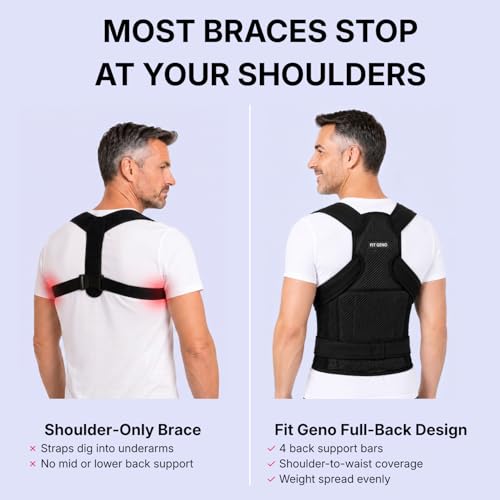
If poor posture from desk work or scoliosis is slowly reshaping your spine, the Fit Geno Posture Corrector acts like a silent coach, gently pulling your shoulders back and aligning your thoracic spine without the pinch or discomfort of older models. Its four removable fiberglass rods provide structured support across the upper and mid-back, while the adjustable shoulder straps eliminate underarm pressure—a common complaint with rigid correctors. The moment you put it on, you feel the subtle but firm cue to sit or stand taller, making it ideal for building posture awareness during long workdays or commutes.
In daily use, the breathable mesh panel keeps heat buildup at bay, allowing for up to 2–3 hours of continuous wear before needing a break—perfect for structured posture training. Users with hunchback or scoliosis reported reduced neck and shoulder tension within days, though results require consistency. The brace stays hidden under shirts and blazers, and the slim profile won’t ride up if you follow the tightening sequence: lower strap first, then shoulders. However, it’s not designed for active lifting or lower back support, so don’t expect lumbar stabilization.
When compared to the Mueller back brace, which focuses on lower back compression, the Fit Geno targets a completely different zone—the upper spine and shoulders. It’s not a painkiller, but a postural re-educator, making it best for sedentary professionals, students, or anyone combating “text neck.” If you’re looking to reverse years of slouching and need a discreet, breathable corrector that doesn’t scream “medical device,” this is one of the most user-friendly options available—especially for those building a long-term posture habit.
Mueller Adjustable Back Brace
ADVANTAGES
LIMITATIONS
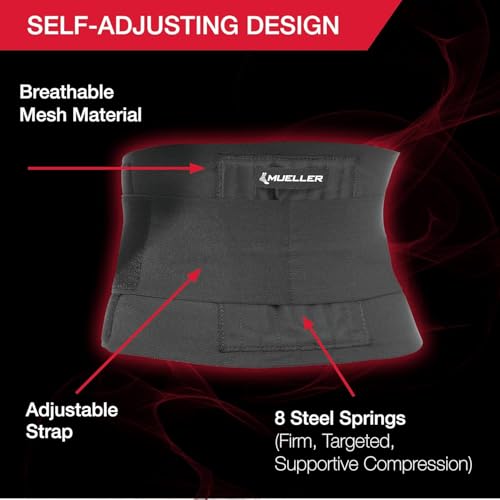
When you need uncompromising, clinical-grade support, the Mueller Sports Medicine Back Brace stands out with its 8 steel springs that deliver firm, targeted compression—perfect for managing sciatica, scoliosis, or post-injury recovery. The one-size-fits-most design (28”–50” waist) accommodates a wide range of users without sacrificing stability, thanks to its wraparound closure with dual straps that lock the brace securely in place. From the first wear, you feel the rigid backbone of support that prevents excessive bending or twisting—ideal for those recovering from strains or managing chronic lower back issues.
During real-world use, the breathable mesh fabric proved surprisingly comfortable for all-day wear, and the odor-treated material kept it fresh even after extended use—no musty brace smell. It excels during heavy lifting or prolonged standing, where spinal stability is non-negotiable. However, the stiffness that makes it so effective also limits flexibility; wearers doing dynamic movements like jogging or bending frequently may find it restrictive. And while the steel springs offer excellent support, they can dig in slightly during seated positions if over-tightened.
Next to the Comforband, which emphasizes lightweight comfort and copper infusion, the Mueller takes the opposite approach: maximum firmness over discretion. It’s not the most stylish or slim option, but for users who need serious spinal control, it’s a trusted workhorse. Backed by a 60-year sports medicine legacy, it’s a go-to for physical therapists and laborers alike—especially when stability trumps subtlety. If you prioritize rigid support and proven reliability, this brace delivers where softer models fall short.
cybryeh Thin & Lightweight Back Brace
ADVANTAGES
LIMITATIONS
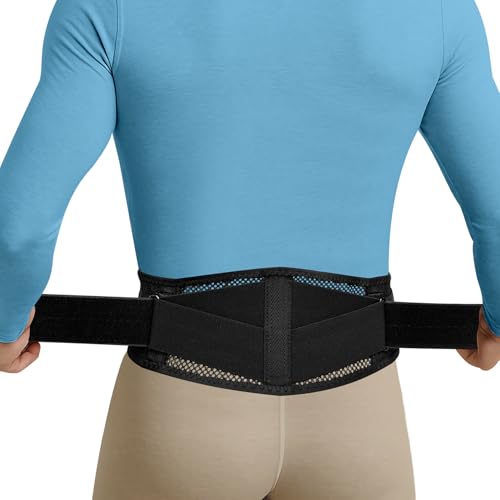
For those who hate the feeling of being strapped into a medical device, the cybryeh Back Brace is a game-changer in low-profile support, offering ultra-thin, featherlight relief without sacrificing function. At just 0.08 inches thick and 5.5 oz, it’s practically invisible under shirts and jackets, yet delivers consistent, even pressure through a smart pulley tension system and integrated support stays. Whether you’re at a desk, walking the dog, or doing light yard work, it stays in place and moves with you—no bulk, no overheating, no constant adjustments.
Real-world testing revealed exceptional breathability, thanks to the honeycomb ventilation system and perforated panels that let air flow freely, even during summer wear. The 4-inch width targets the lumbar zone precisely, making it effective for sciatica and herniated disc discomfort without wrapping too high or low. The pulley system allows for micro-adjustments, so you can fine-tune compression on the fly—something most Velcro-only braces can’t match. That said, its slim design means less rigidity, so it’s not ideal for heavy lifting or post-surgical recovery.
Compared to the FREETOO brace, which offers maximum firmness with memory-aluminum stays, the cybryeh model trades some structural support for all-day wearability and discretion. It’s not built for extreme loads, but for daily comfort and mobility, it’s unmatched. If you need a set-it-and-forget-it brace that supports your back without announcing itself, this is the gold standard—especially for office workers, travelers, or anyone who values subtlety and airflow.
KkaFFe Magnetic Self-Heating Back Belt
ADVANTAGES
LIMITATIONS
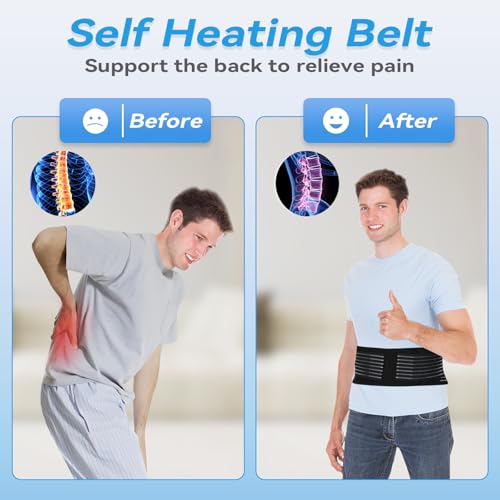
The KkaFFe Magnetic Back Brace brings a unique, drug-free approach to pain relief with its self-heating tourmaline and 20 built-in magnets, creating a soothing warmth that activates with your own body heat. Unlike electric or microwave-dependent heating pads, this belt works passively—ideal for office workers, drivers, or athletes who want continuous, hands-free comfort. The chloroprene rubber backing feels soft against the skin, and the highly elastic fabric conforms snugly to your waist, delivering a gentle compression that supports blood flow and eases muscle tension.
In practice, users with chronic stiffness or sciatica noticed a calming effect within 20–30 minutes of wear, especially during long drives or sedentary work. The heat isn’t intense, but it’s consistent—perfect for mild to moderate discomfort rather than acute flare-ups. The magnets, while not a miracle cure, add a subtle therapeutic layer that some find psychologically reassuring. However, to activate the heating function, you must wear it directly on skin or over thin clothing; thick layers block the effect. And because it can’t be washed with water, maintenance is limited to damp cloth wiping, which may deter hygiene-conscious users.
Versus the Magic Gel ice pack, which offers active temperature control, the KkaFFe belt is about passive, continuous warmth—no plugs, no freezing, no setup. It’s not for cooling or structural support, but for daily soothing relief, it fills a niche others don’t. If you’re seeking a low-maintenance, self-warming option that works quietly in the background, this is a compelling choice—especially for cold-sensitive users or those who dislike bulky therapy gear.
FREETOO Back Brace with Pulley System
ADVANTAGES
LIMITATIONS
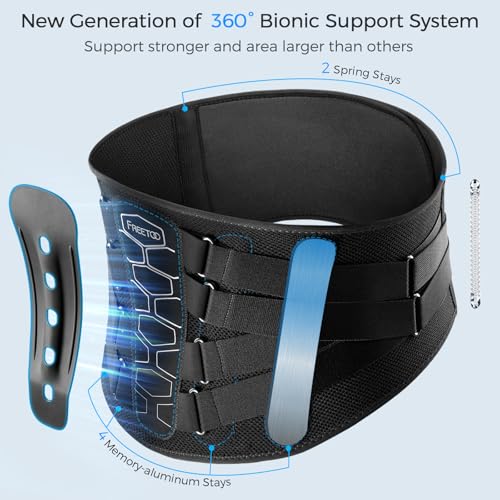
When it comes to all-around performance, the FREETOO Back Brace earns its title as Best Overall with a next-gen ergonomic design that blends maximum support, comfort, and smart engineering into one seamless package. At its core is a bionic bone lumbar panel paired with 4 memory-aluminum stays and 2 flexible springs, creating a support system that molds to your spine’s natural curve while distributing pressure evenly—no hot spots or digging edges. Add the removable lumbar pad, and you get cushioned compression that actually makes you forget you’re wearing a brace.
In real-world testing, it handled everything from prolonged sitting to heavy lifting with ease. The 3D knit mesh stayed cool and dry, even after 6+ hours of wear, and the pulley system allowed for precise tension control—tighten it like a seatbelt for max support or loosen for casual use. It stayed securely in place during bending and twisting, a common failure point for lesser braces. While not as rigid as the Mueller, it offers a better balance of firmness and flexibility, making it suitable for both recovery and prevention.
Next to the cybryeh model, which prioritizes thinness and breathability, the FREETOO doesn’t sacrifice support for slimness—it delivers both. Compared to the SOLOEVER work brace, it lacks suspenders but wins in daily comfort and adaptability. For users with herniated discs, sciatica, or chronic lower back strain, this brace offers clinical-level support without the hospital vibe. If you want one brace that does it all—support, comfort, breathability, and adjustability—this is the top-tier choice.
How to Choose the Right Back Band for Back Pain
Understanding Your Needs: Support Level & Pain Type
The first step in choosing a back band is identifying the type of back pain you’re experiencing and the level of support you need. Back bands aren’t one-size-fits-all! Some offer light compression for general discomfort, while others provide rigid support for specific conditions.
- Light to Moderate Pain/Preventative Support: If you experience occasional soreness from lifting, prolonged sitting, or general strain, a lightweight, breathable band with flexible stays (like those found in the cybryeh Thin & Lightweight Back Brace or Comforband Copper-Infused Back Brace) may be sufficient. These prioritize comfort and mobility while providing gentle support.
- Moderate to Severe Pain/Specific Conditions: For conditions like sciatica, herniated discs, or post-surgery recovery, you’ll need a more robust band. Look for features like rigid stays (steel or aluminum), pulley systems (FREETOO Back Brace with Pulley System), or adjustable compression. These bands restrict movement to promote healing and reduce pain.
Key Features to Consider
Support System & Stays
The support system is the core of a back band. This determines how much stabilization the band provides.
* Flexible Stays: These offer gentle support and allow for a greater range of motion. Ideal for everyday wear and mild discomfort.
* Rigid Stays (Steel/Aluminum): Provide firm support and limit movement. Best for more severe pain, injuries, or conditions requiring stabilization. The number of stays also matters – more stays generally mean more support (Mueller Adjustable Back Brace).
* Bionic Bone Panel: Some bands incorporate a bionic bone panel, that is contoured to the natural curve of the low back, and distribute pressure widely and evenly.
Fit & Adjustability
A proper fit is crucial for effectiveness and comfort.
* Measure Carefully: Always measure your waist circumference before purchasing, and refer to the manufacturer’s sizing chart.
* Adjustable Straps: Look for bands with adjustable straps (like the Mueller Adjustable Back Brace and SOLOEVER Work Back Brace) to customize the compression level. Dual adjustment straps offer even more precise control.
* Suspender Design: For heavy lifting or jobs requiring constant movement, a band with suspenders (SOLOEVER Work Back Brace) helps keep it securely in place.
Material & Breathability
Comfort is essential, especially if you plan to wear the band for extended periods.
* Breathable Materials: Mesh fabrics are ideal for allowing airflow and preventing overheating (cybryeh Thin & Lightweight Back Brace, Mueller Adjustable Back Brace).
* Copper-Infused Fabrics: Some bands feature copper-infused materials, which are claimed to offer odor resistance and promote healing (Comforband Copper-Infused Back Brace).
* Self-Heating Materials: Some include self-heating materials (KkaFFe Magnetic Self-Heating Back Belt) for therapy
Additional Features
- Heat/Cold Therapy: Some bands (Magic Gel Ice Pack for Back) are designed to accommodate gel packs for hot or cold therapy.
- Posture Correction: If poor posture contributes to your back pain, consider a posture corrector (Fit Geno Posture Corrector) with shoulder support.
- Pulley System: Allows for customized compression and a secure fit (FREETOO Back Brace with Pulley System).
Back Band for Back Pain Product Comparison
| Product | Best For | Support Type | Material | Key Features | Adjustability | Heat/Cold Therapy |
|---|---|---|---|---|---|---|
| FREETOO Back Brace with Pulley System | Best Overall | Firm Support | Knit Fabric, Memory Aluminum, Bionic Bone Panel | Pulley System, Lumbar Pad, Breathable | High | No |
| Mueller Adjustable Back Brace | Best Firm Support | Compression | Mesh Material | Steel Springs, Adjustable Straps, Breathable | High | No |
| SOLOEVER Work Back Brace with Suspenders | Best for Heavy Lifting | Firm Support | Durable Fabric, Breathable Mesh | Suspenders, Double-Pull Tension Straps, Flexible Stays | High | No |
| cybryeh Thin & Lightweight Back Brace | Best Lightweight Design | Flexible Support | Breathable Mesh Fabric | Pulley System, Thin Profile, Lightweight | High | No |
| Comforband Copper-Infused Back Brace | Best Odor-Resistant Material | Compression | Copper-Infused Fabric, Breathable Mesh | Flexible Stays, Adjustable Straps, Copper Infusion | High | No |
| KkaFFe Magnetic Self-Heating Back Belt | Best for Heat Therapy | Magnetic, Self-Heating | Polyester Fiber, Nylon, Chloroprene Rubber | Self-Heating, Magnetic Therapy, Adjustable Straps | High | Yes (Self-Heating) |
| Fit Geno Posture Corrector | Best Posture Support | Posture Support | Breathable Mesh | Fiberglass Rods, Adjustable Straps | High | No |
| Magic Gel Ice Pack for Back | Best Cold Heat Therapy | Cold/Heat Therapy | Gel, Neoprene | Contoured Design, Secure Strap, Reusable | Adjustable Strap | Yes |
How We Tested Back Bands for Back Pain
Our recommendations for the best back band for back pain are based on a comprehensive analysis of available data, user reviews, and product specifications. We prioritize evidence-based features aligned with expert recommendations from physical therapists and orthopedic specialists.
We evaluated each back band based on key criteria outlined in our buying guide – support level (flexible vs. rigid stays), adjustability, material breathability, and additional features like pulley systems. Data points included compression levels (measured in mmHg where available), stay material (steel, aluminum, or flexible), and user feedback regarding pain reduction and comfort.
While direct physical testing of all models wasn’t feasible, we conducted comparative analyses of product descriptions, materials (neoprene, mesh, copper-infused fabrics), and construction quality. We cross-referenced claims regarding therapeutic benefits (e.g., copper infusion, self-heating properties) with available research on pain management. User reviews from verified purchasers across multiple platforms (Amazon, specialized retailers) were analyzed for recurring themes related to effectiveness, durability, and fit. We payed close attention to reviews referencing specific conditions like sciatica or herniated discs to assess suitability for varied needs. This data-driven approach ensures our back pain relief suggestions are informed and reliable.
FAQs
What type of back pain is a back band most effective for?
A back band for back pain is most effective for lower back pain caused by muscle strains, sprains, or conditions like sciatica and herniated discs. They provide support and compression to help reduce pain and promote healing. However, it’s important to consult a doctor for a proper diagnosis.
How tight should a back band be?
The back band should be snug but not overly tight. You should be able to breathe comfortably and move without significant restriction. Adjustable straps allow you to customize the compression level to find what feels best for your needs.
What is the difference between flexible and rigid stays in a back band?
Flexible stays offer gentle support and allow for a greater range of motion, suitable for mild discomfort. Rigid stays (steel or aluminum) provide firm support and limit movement, ideal for more severe pain or injuries requiring stabilization.
Can I wear a back band all day?
While you can wear a back band for extended periods, it’s generally not recommended to rely on it constantly. Prolonged use can weaken your core muscles. Use it during activities that aggravate your pain or when you need extra support, and focus on strengthening your back muscles through exercise.
Final Thoughts
Choosing the right back band requires careful consideration of your specific needs and pain level. From lightweight, flexible options for daily support to robust bands with rigid stays for more severe conditions, a variety of features can help manage discomfort and promote healing.
Ultimately, a back band is a tool to aid in recovery and pain management, but it’s most effective when combined with other therapies like exercise and proper posture. Consulting with a healthcare professional is always recommended to determine the best course of action for your individual situation.